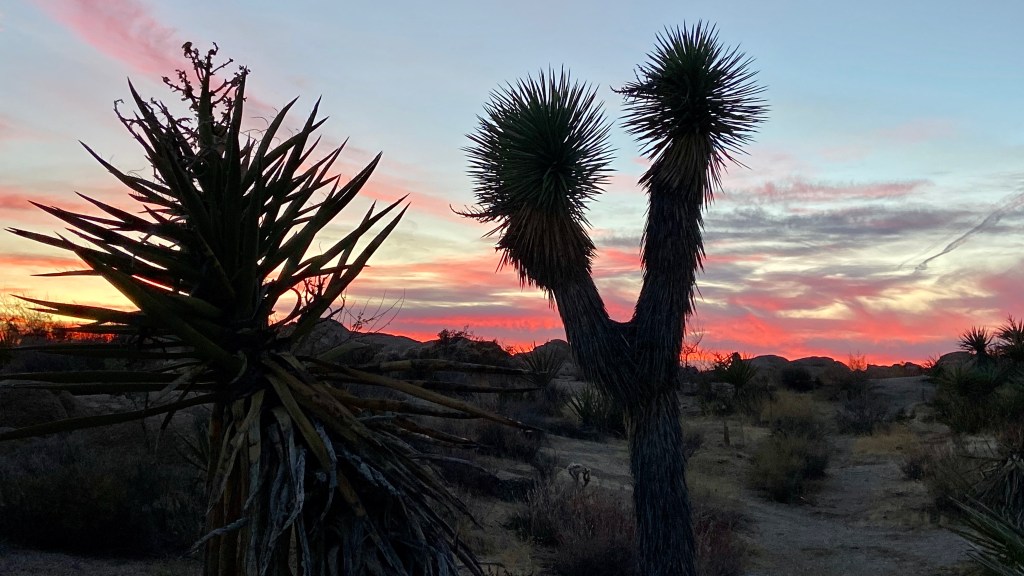
Joshua Tree was always on my to visit list. Finally made it and glad I did. In 1936, the area was proclaimed as a National Monument and then in 1994, it became a National Park. 80% of the park is managed as wilderness.
The eastern part of the park (below 3,000 feet) lies within the Colorado Desert which in-turn is part of the much larger Sonoran Desert. The western part of the park (above 3,000 feet) is part of the Mojave Desert. The park is slightly larger than the state of Rhode Island.
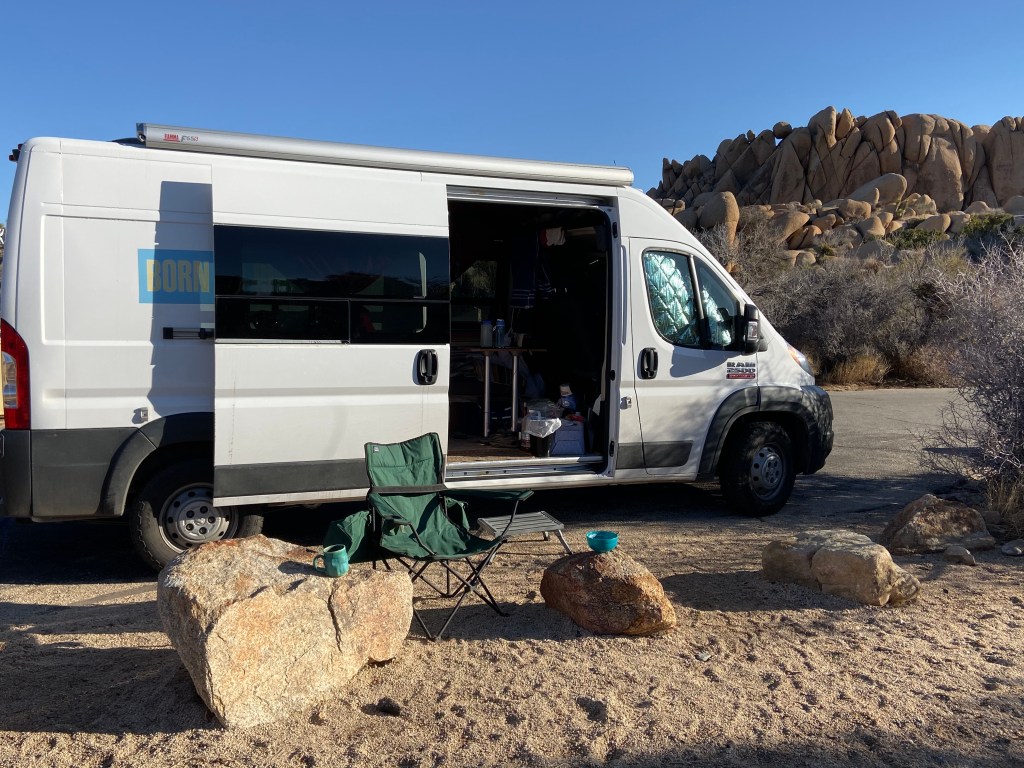
I camped 6 nights in the park, 1 night at Belle Campground and 5 nights at Jumbo Rocks Campground. The park has 8 campgrounds spread across the park. I camped in December (2019) and found that during the week many camping sites remained unused. However, during the weekends everything filled up and also there were many more day users. The park seems to be a weekend get away from the larger cities of the California coast.
The weather during my visit was perfect. Sunny / warm days (warm for December) and cool nights. A person could easily spend 7 or more days in the park and still have sights to see.
There are many private campgrounds that surround the park and also dispersed camping (on BLM land). The dispersed camping sits right outside the park on the north and south sides.
While paved roads cut through the park and access many points of interest, the best way to see the park is by hiking or biking. Bicycles are not allowed on the hiking trails but are allowed on the paved roads as well as the dirt / gravel roads.
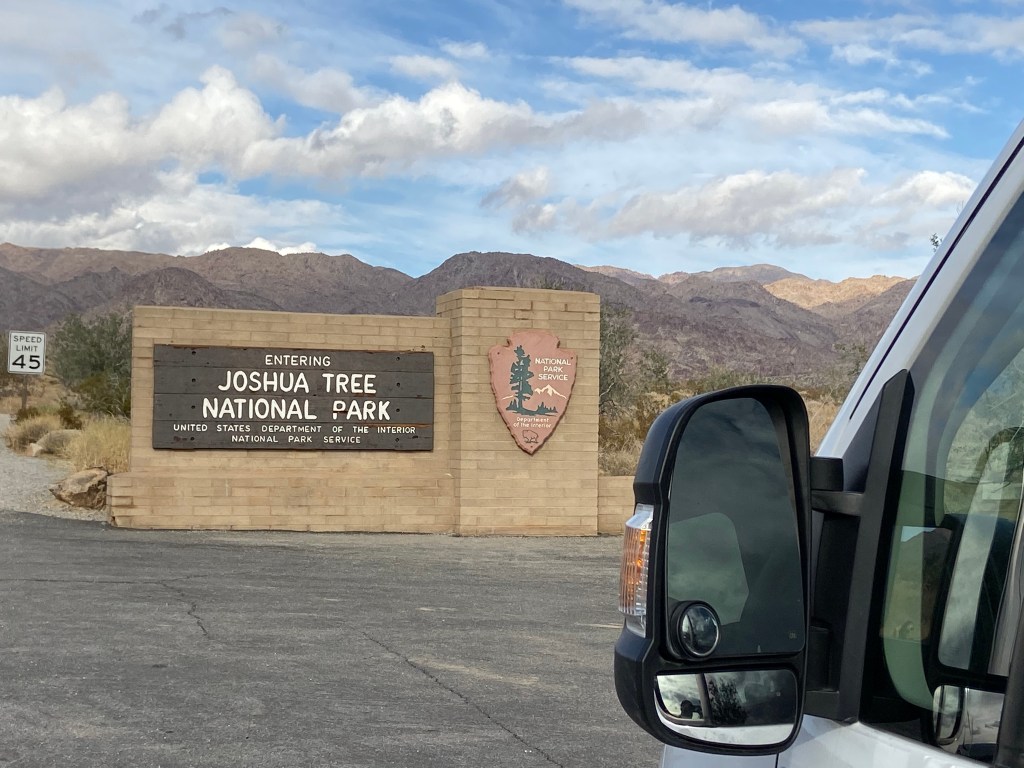
I entered the park from the south which takes one to the Cottonwood Visitor Center.
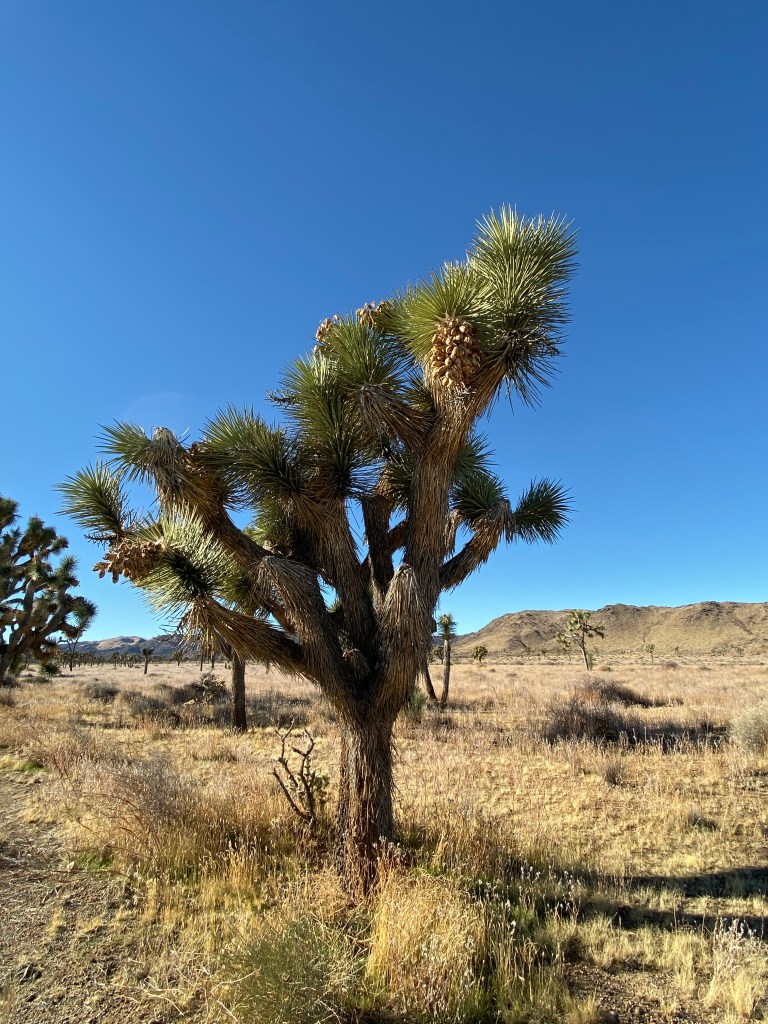
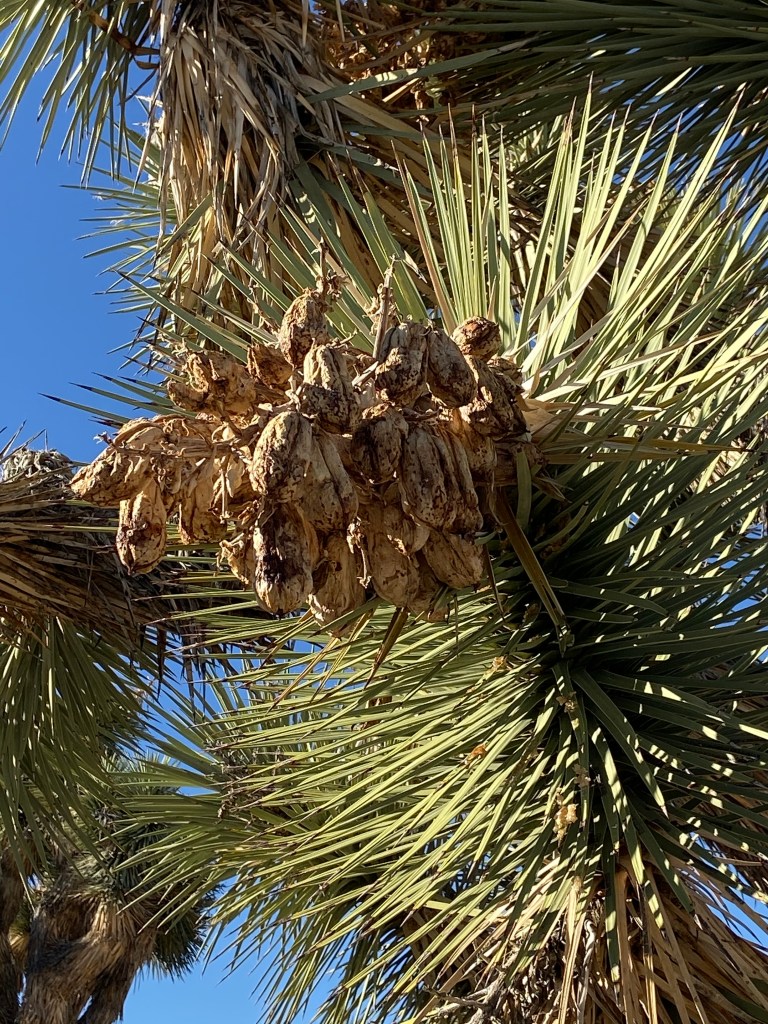
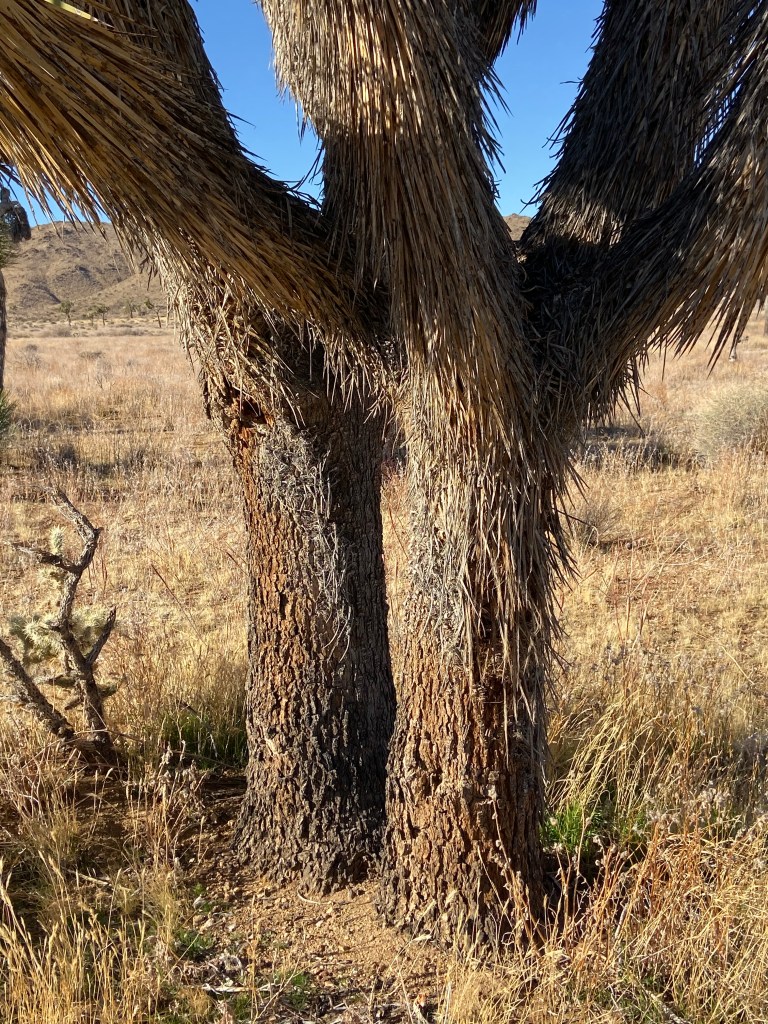
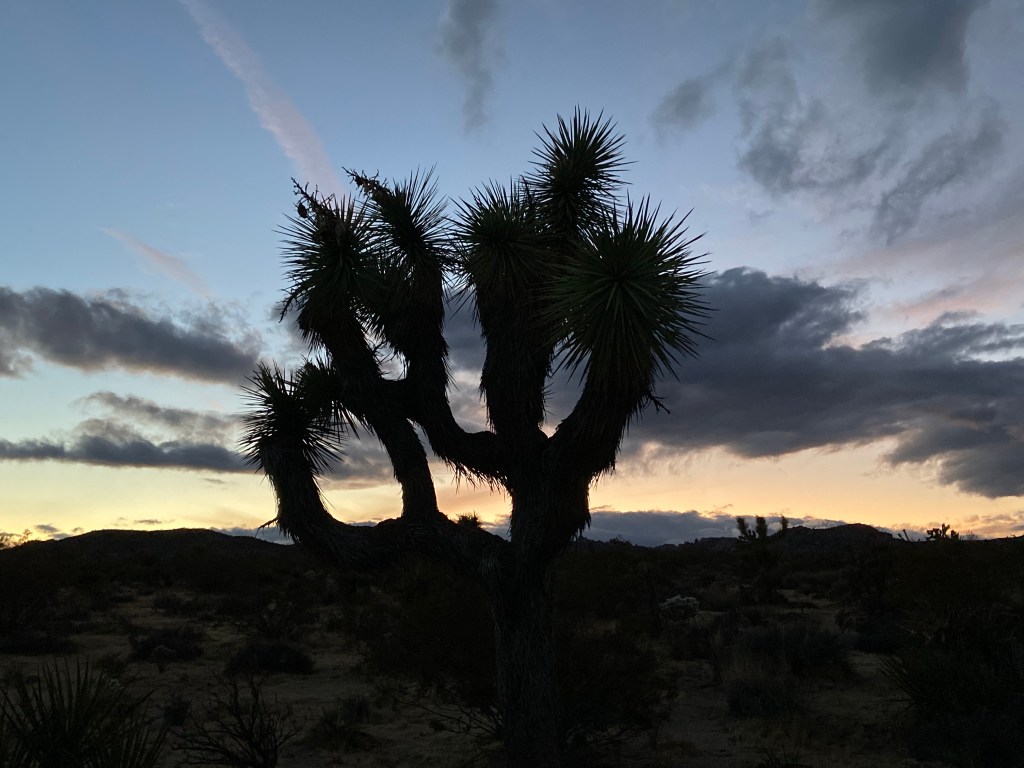
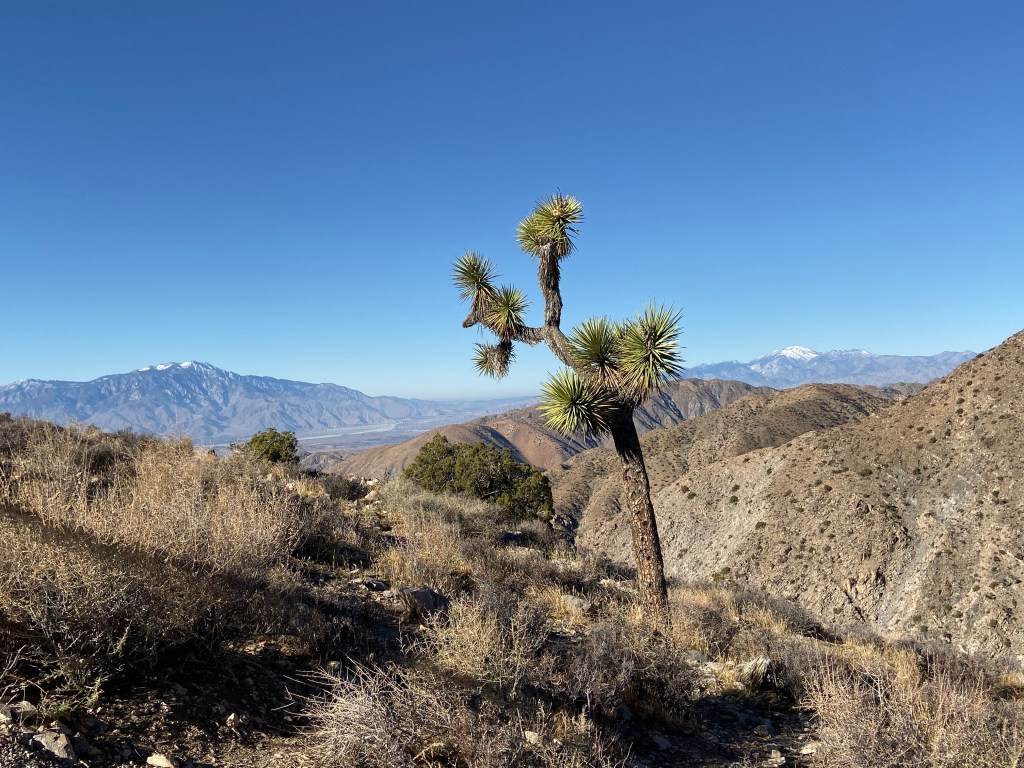
The Joshua Tree:
The name supposedly comes from the biblical Joshua and his outreached hands. It is a type of Yucca that has tree like features.
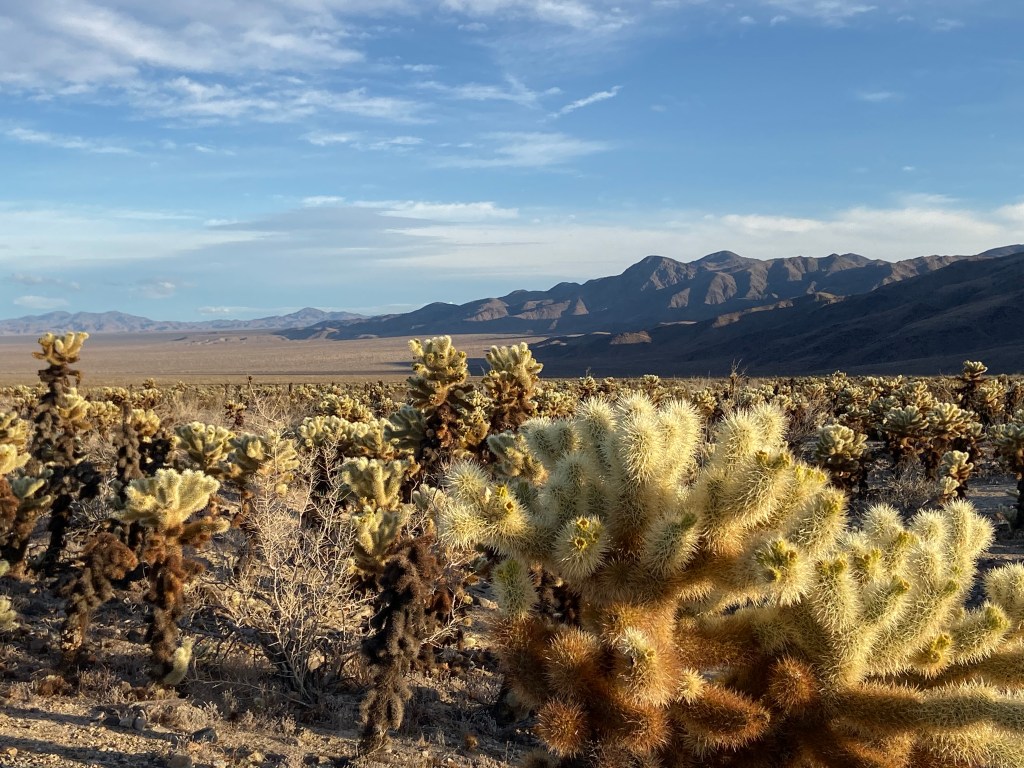
On the way to Belle Campground, I stopped at Cholla Cactus Garden. Pretty cool hike and views.
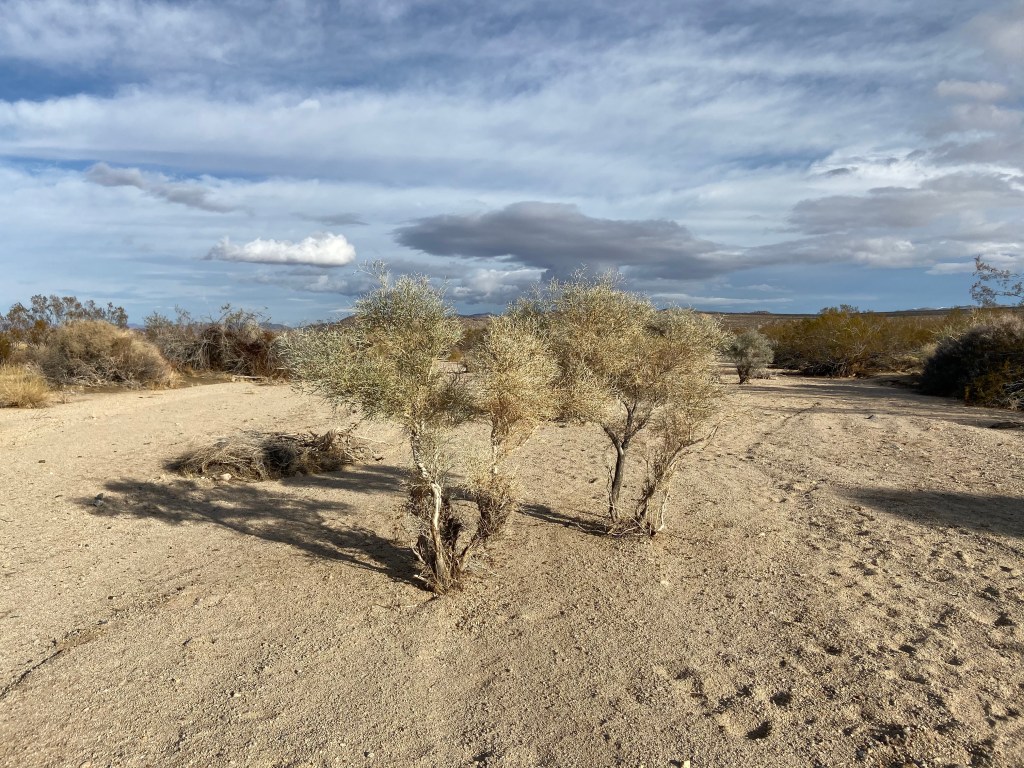
View out to Pinto Basin:
Campsite at Belle Campground:
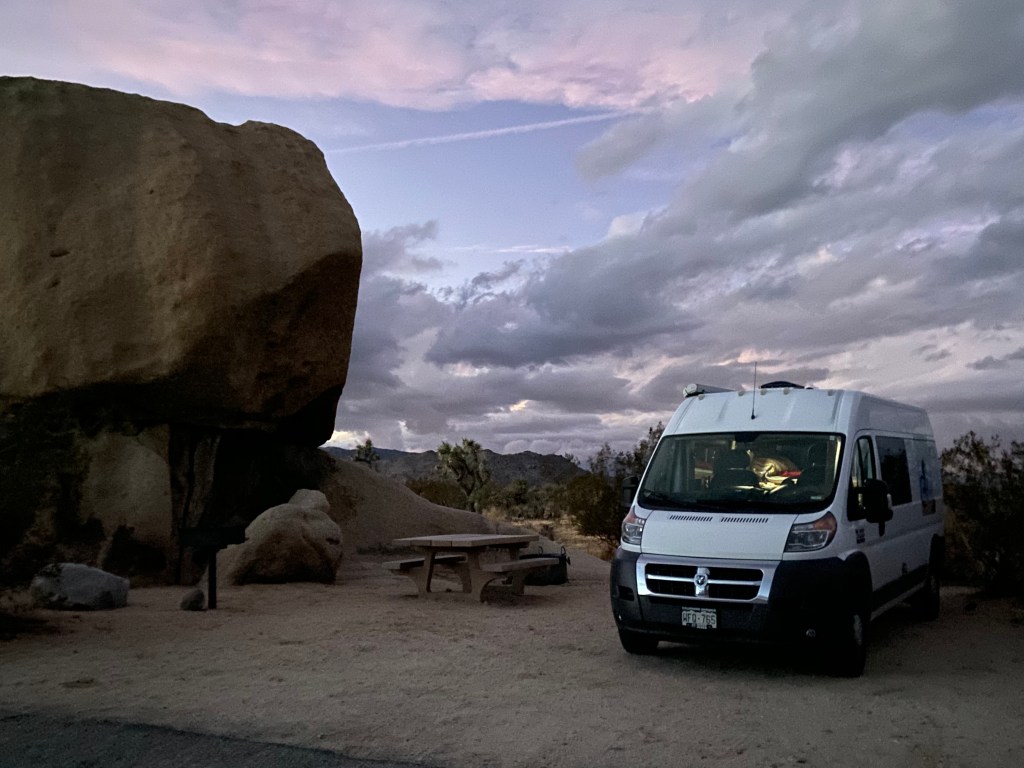
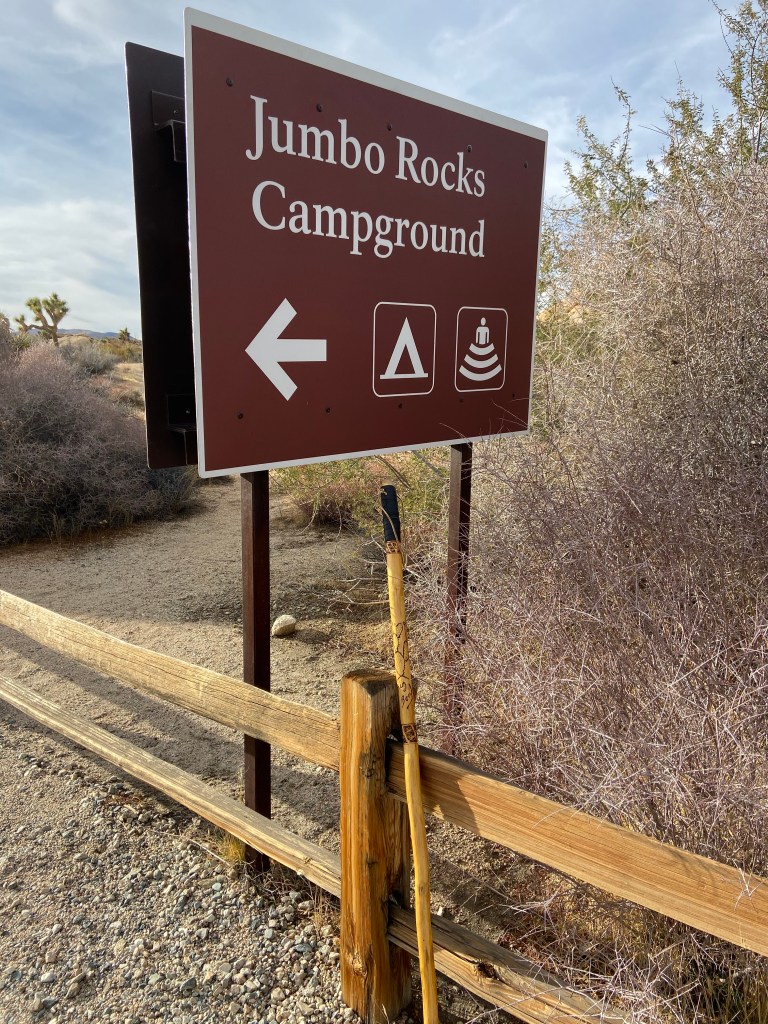
Jumbo Rocks Campground:
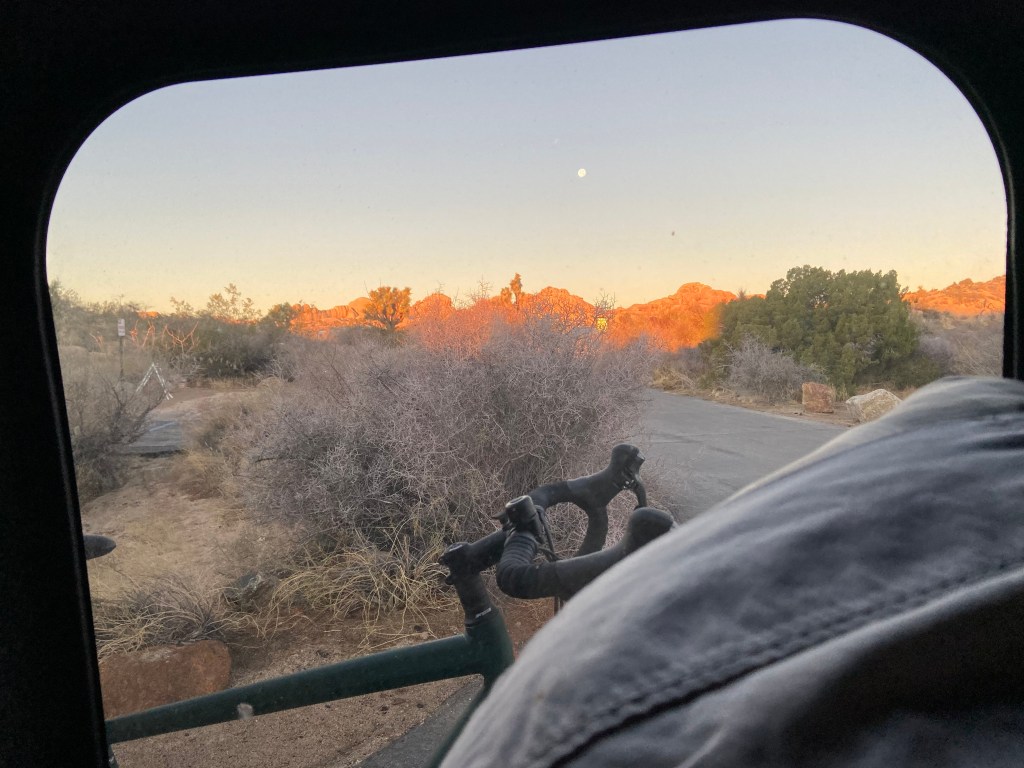
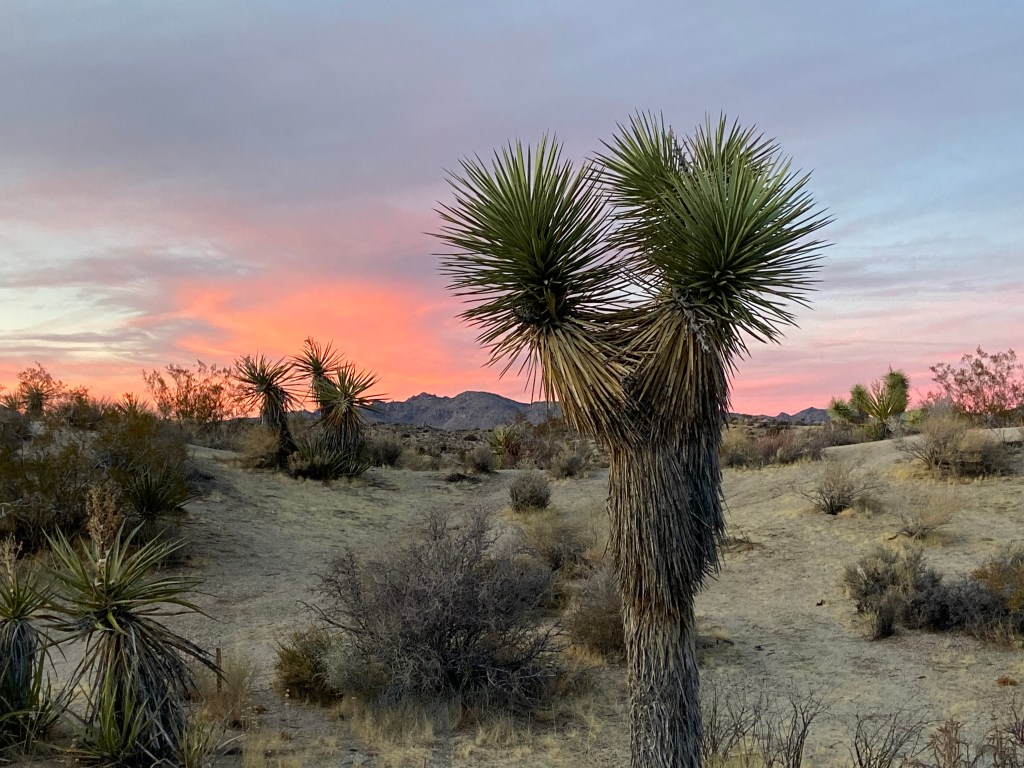
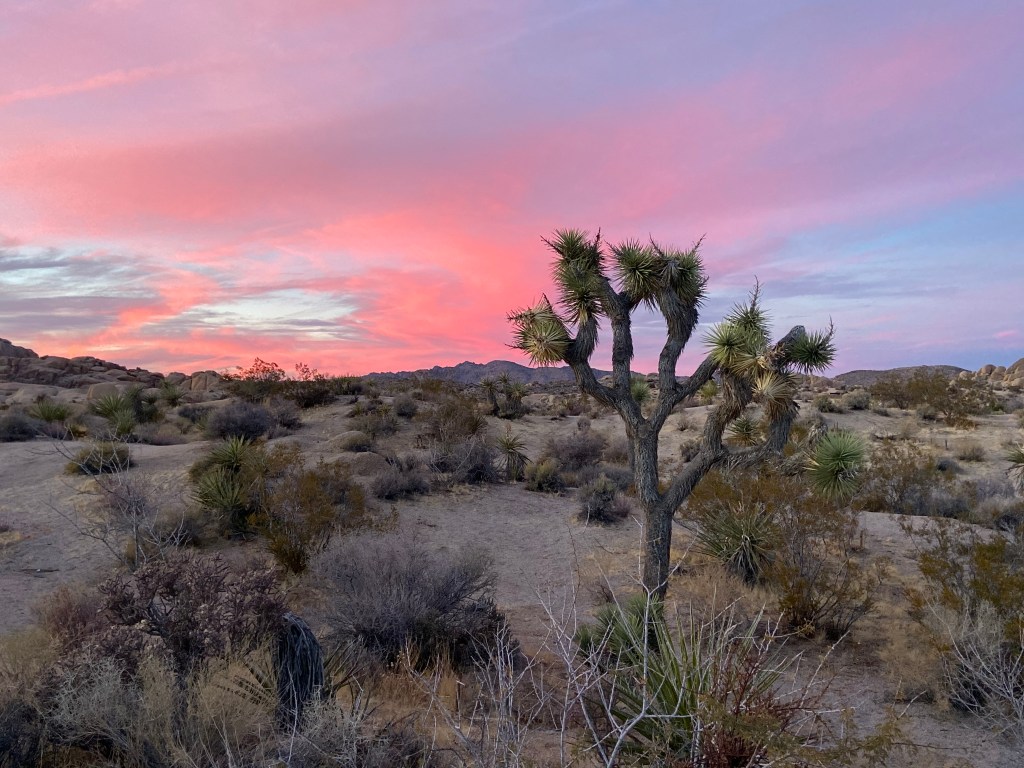
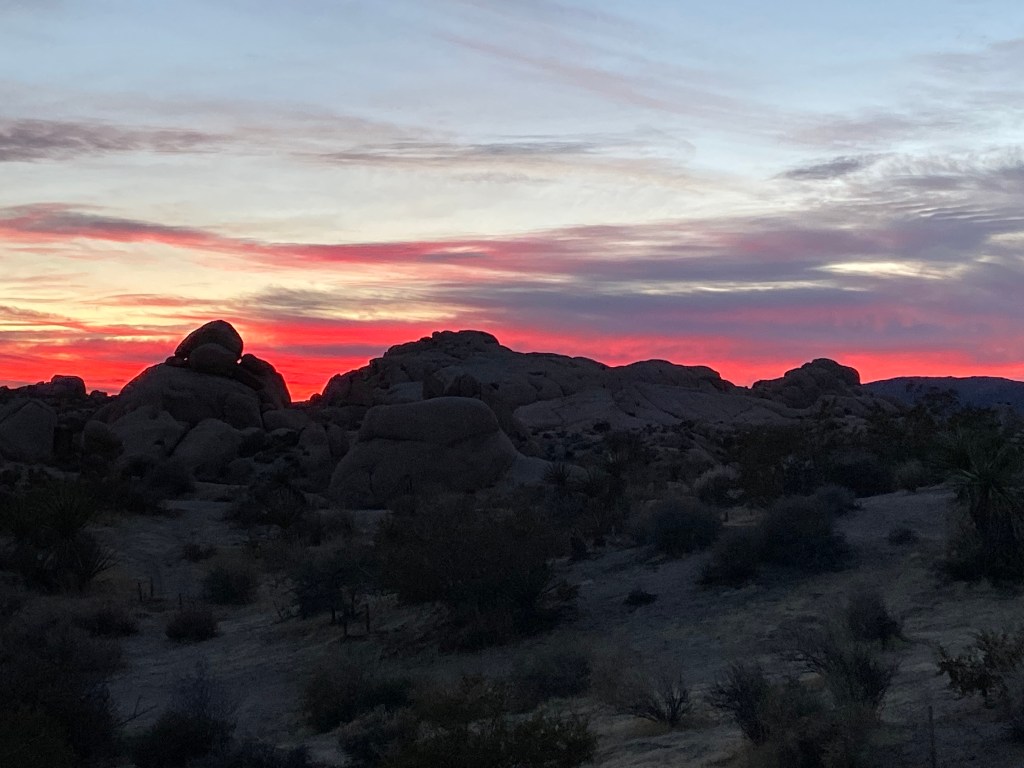
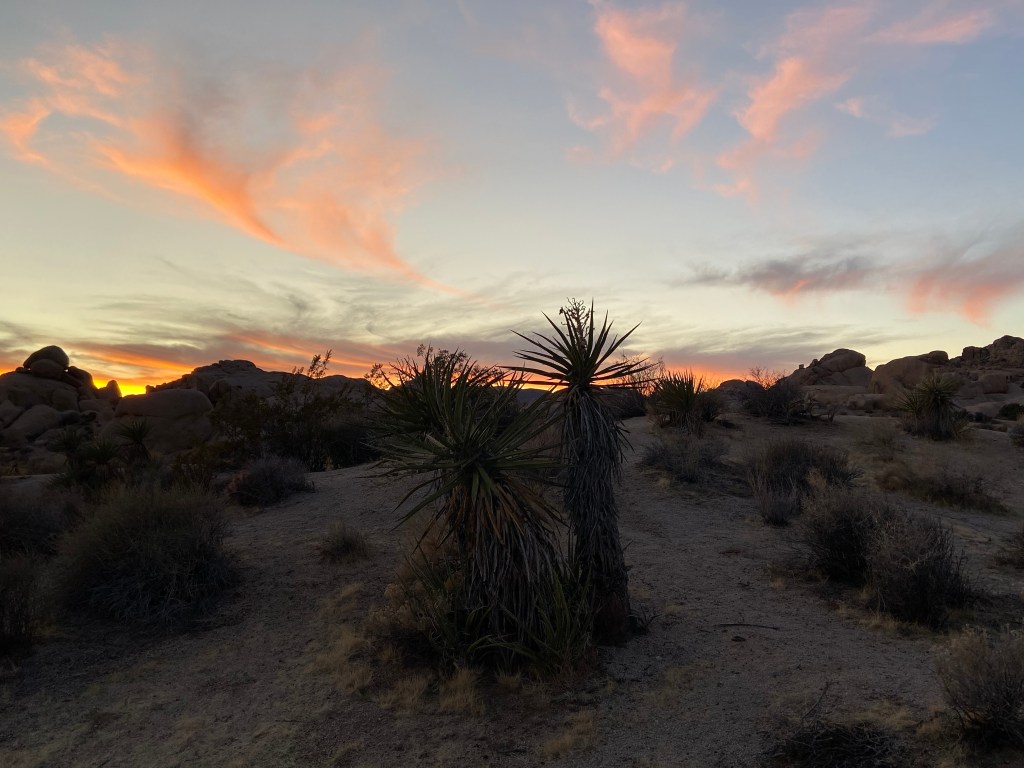
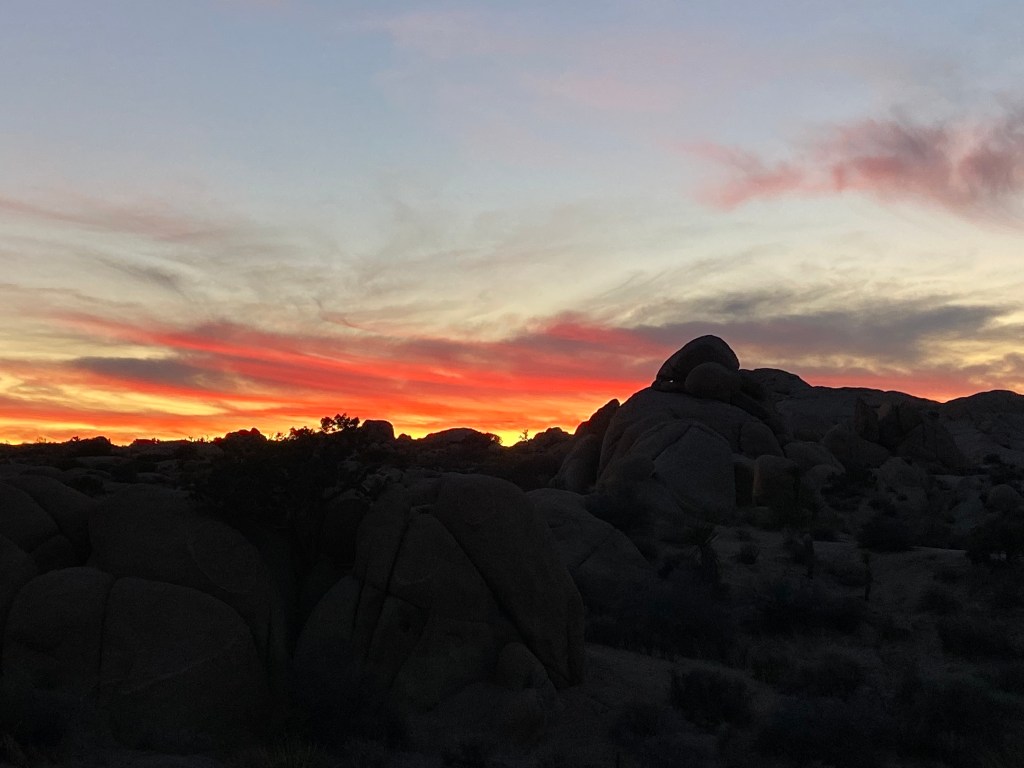
Sunsets: Each night provided some amazing sunsets:
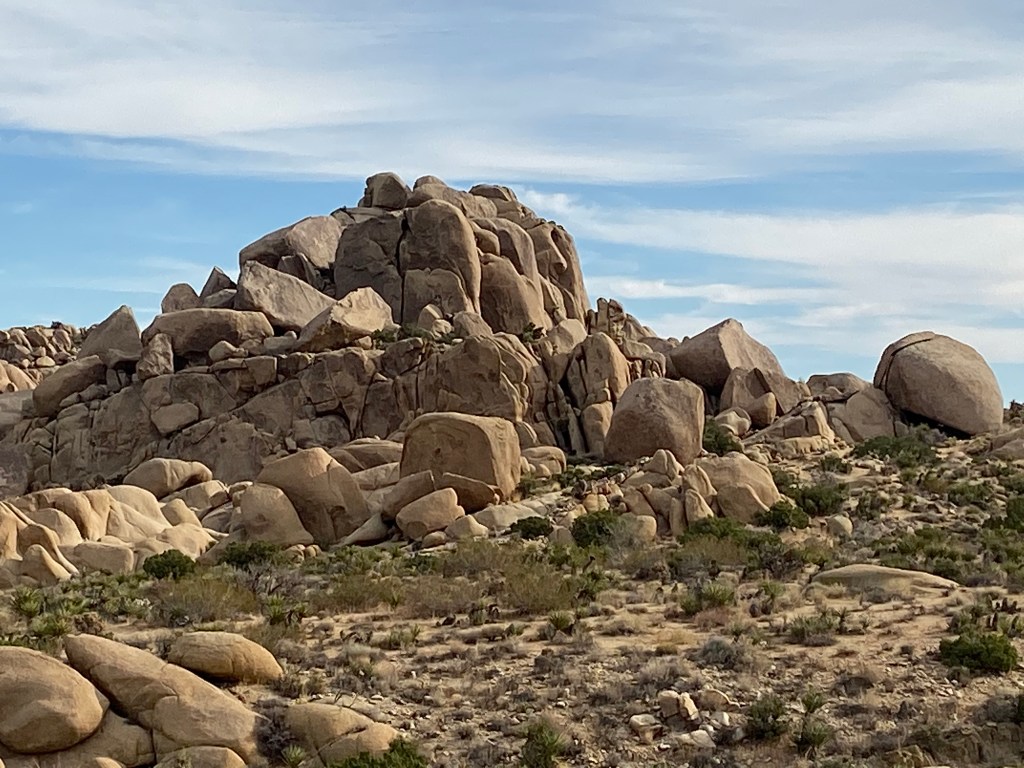
Hiking:
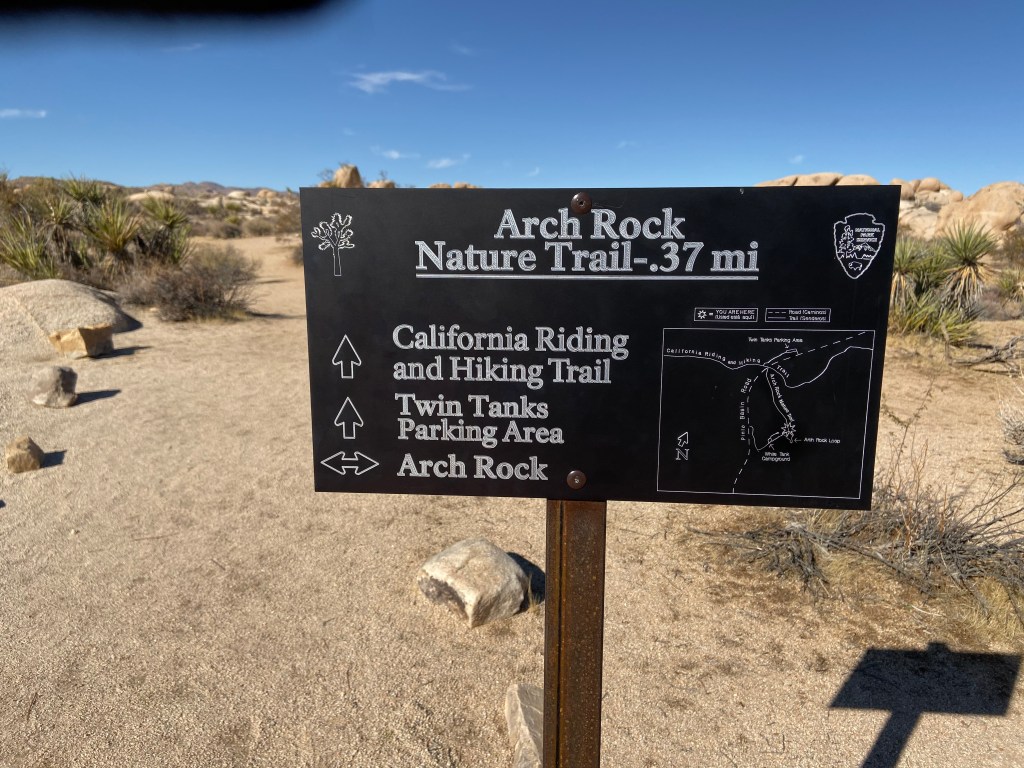
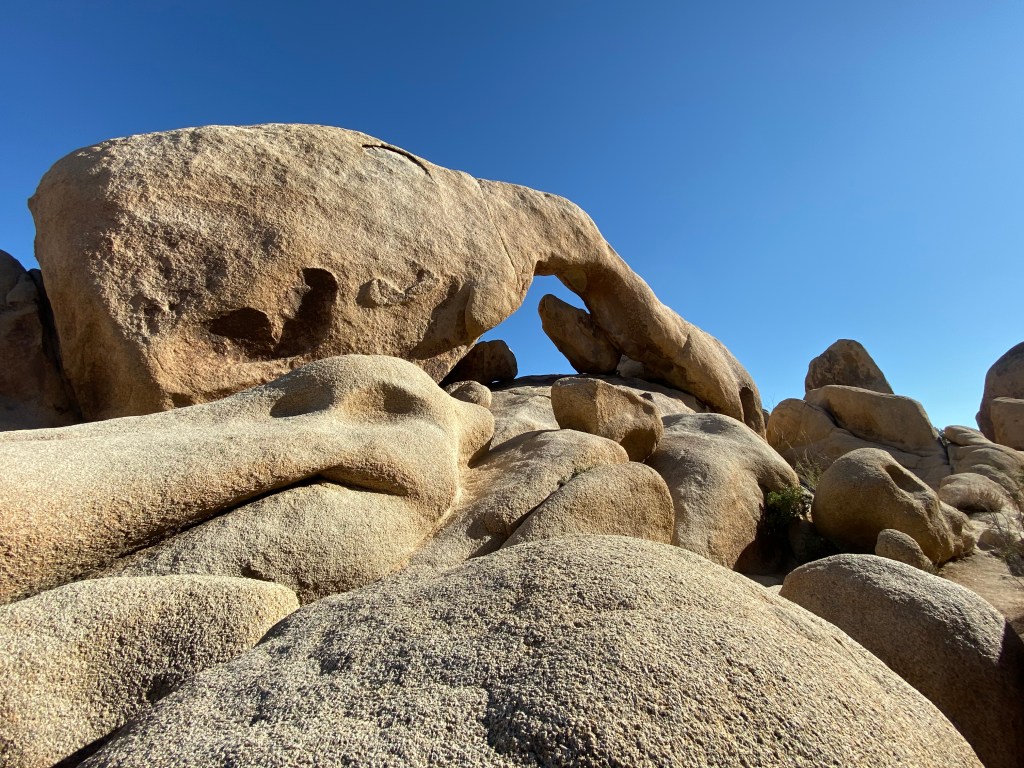
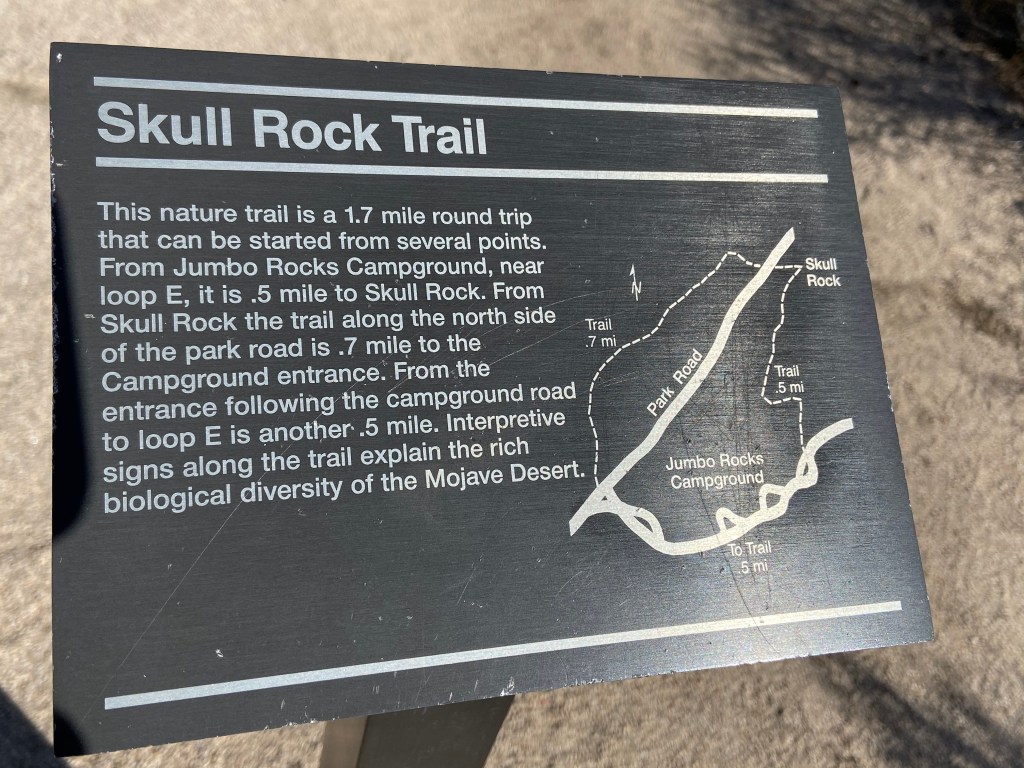
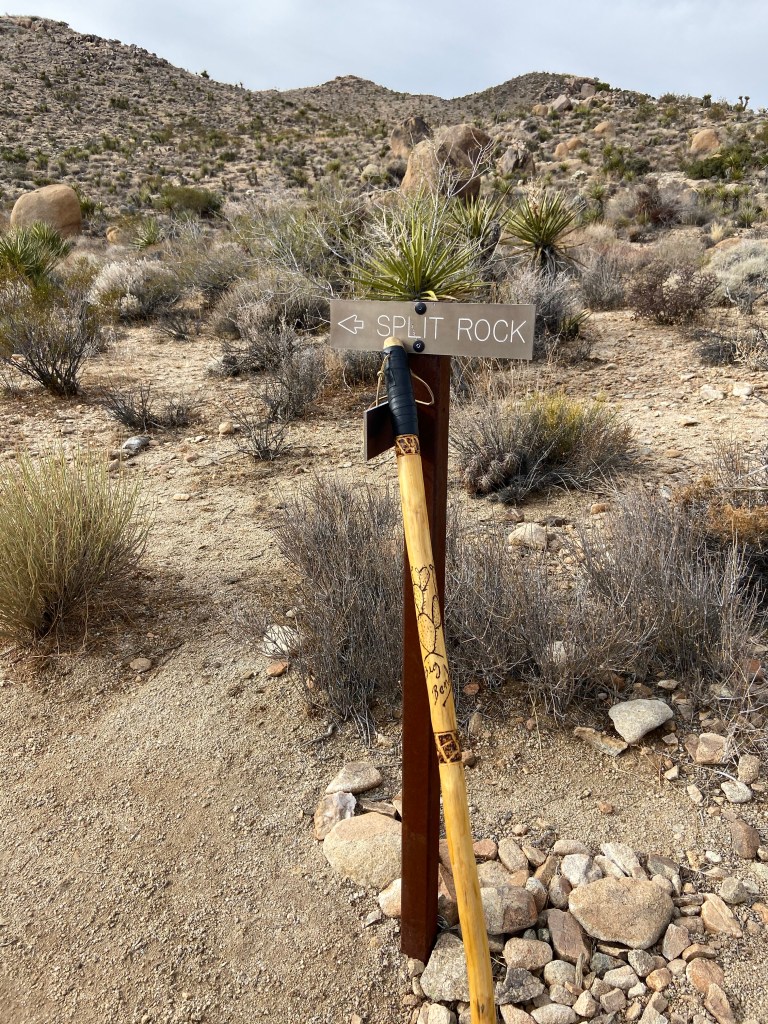
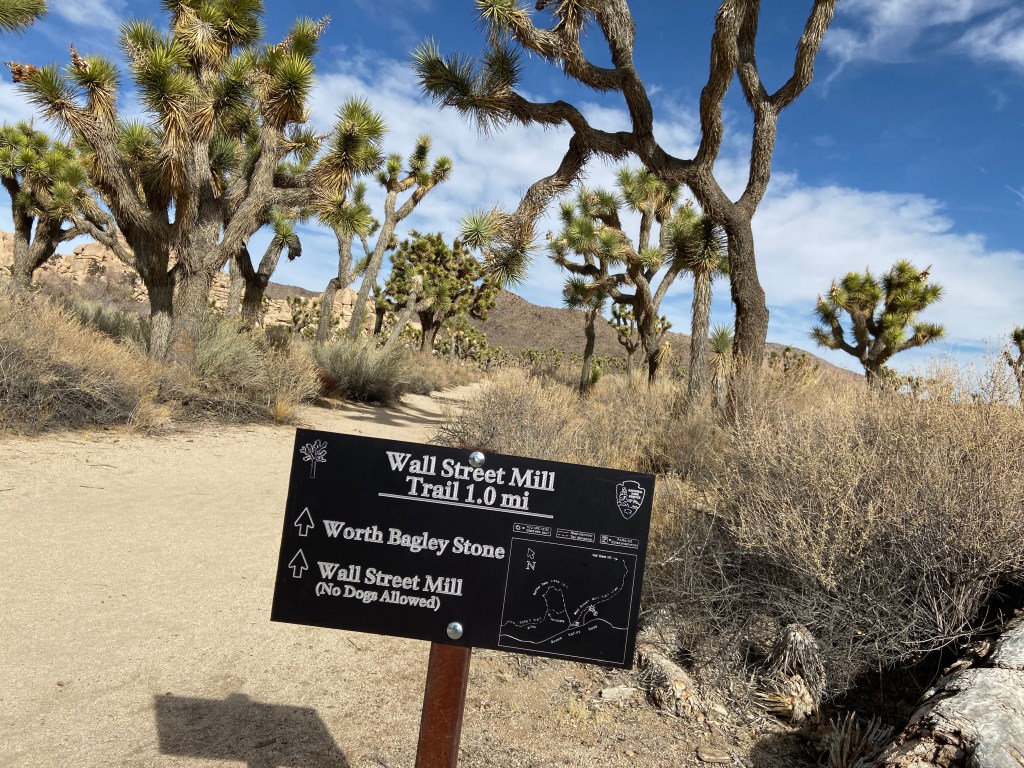
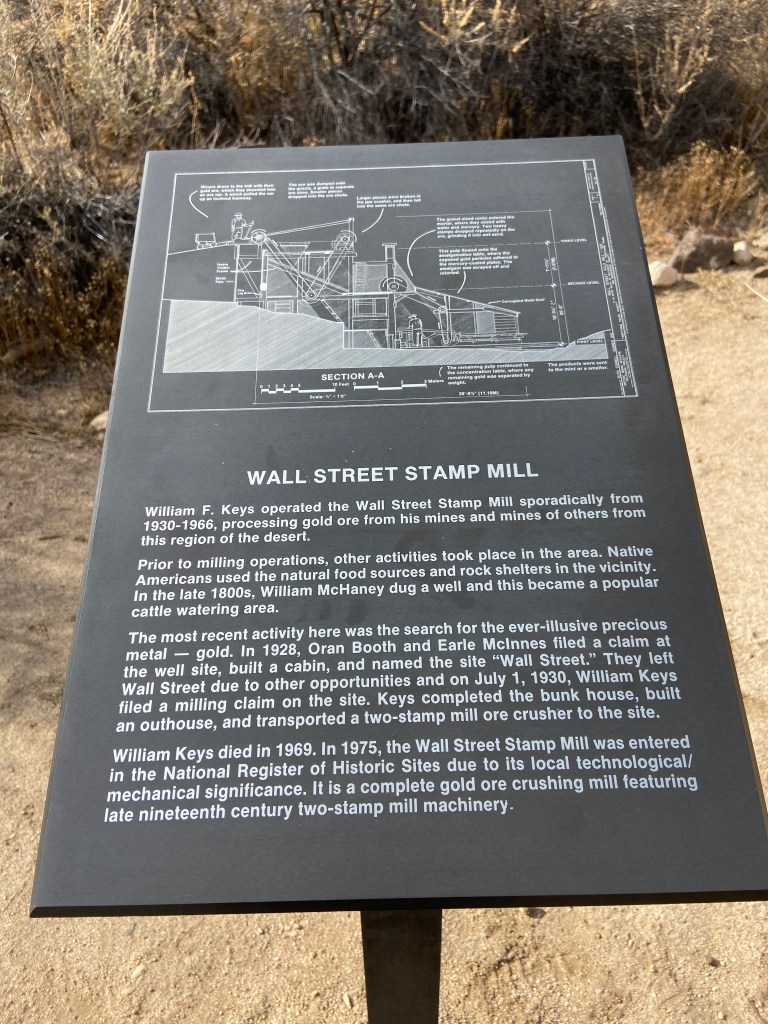
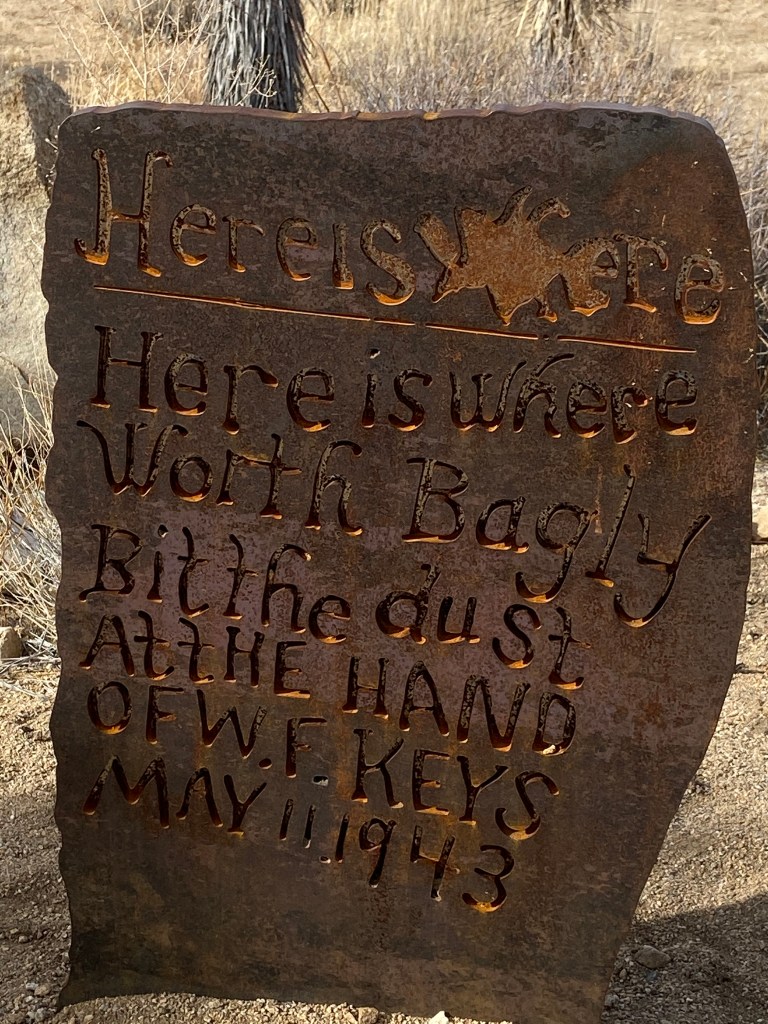
Before becoming a Monument / Park, the area was used for mining, ranching and farming which brought a real cast of character to the region. The hiking trails take one not only to areas of natural features but also to the man made operations.
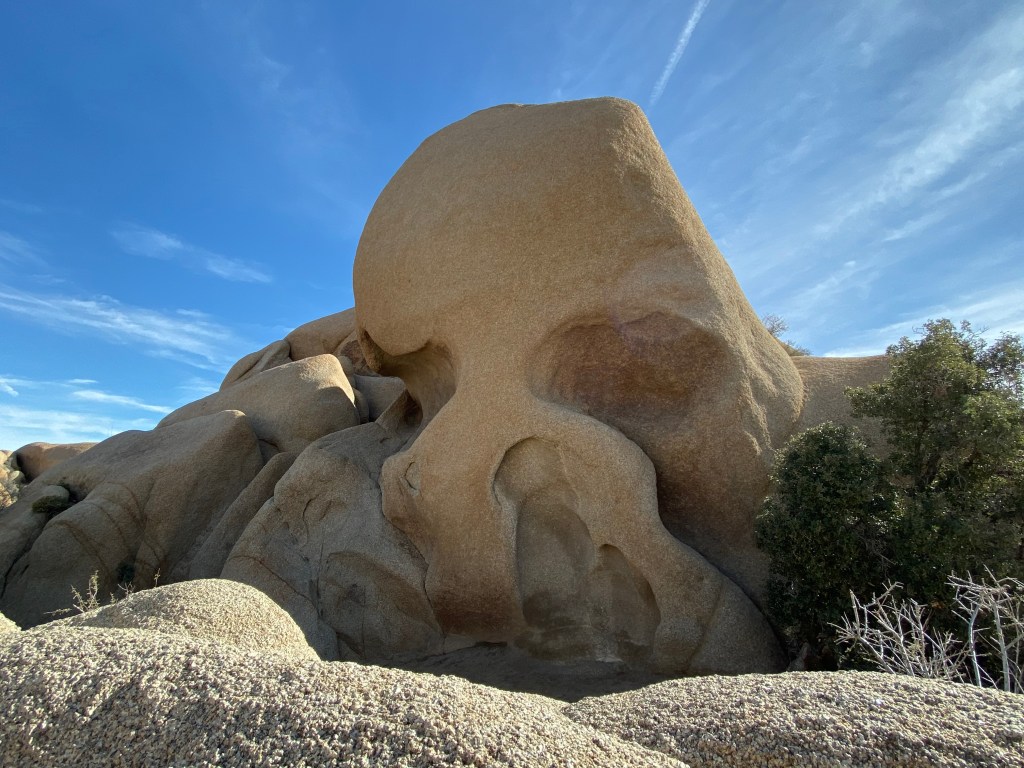
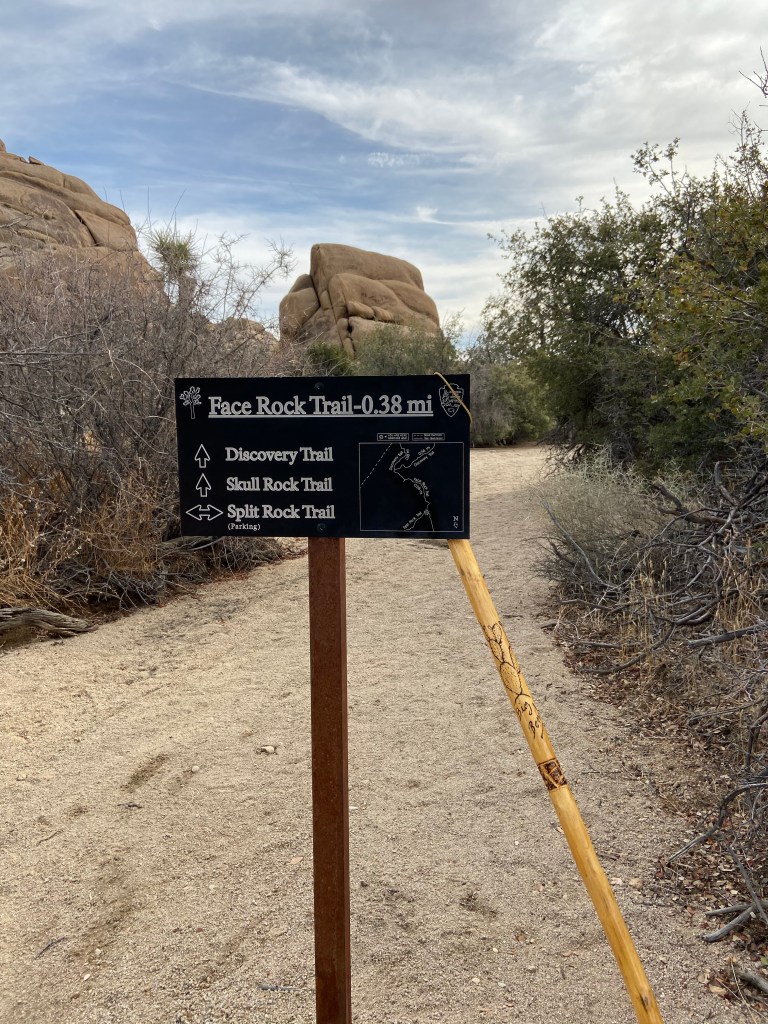
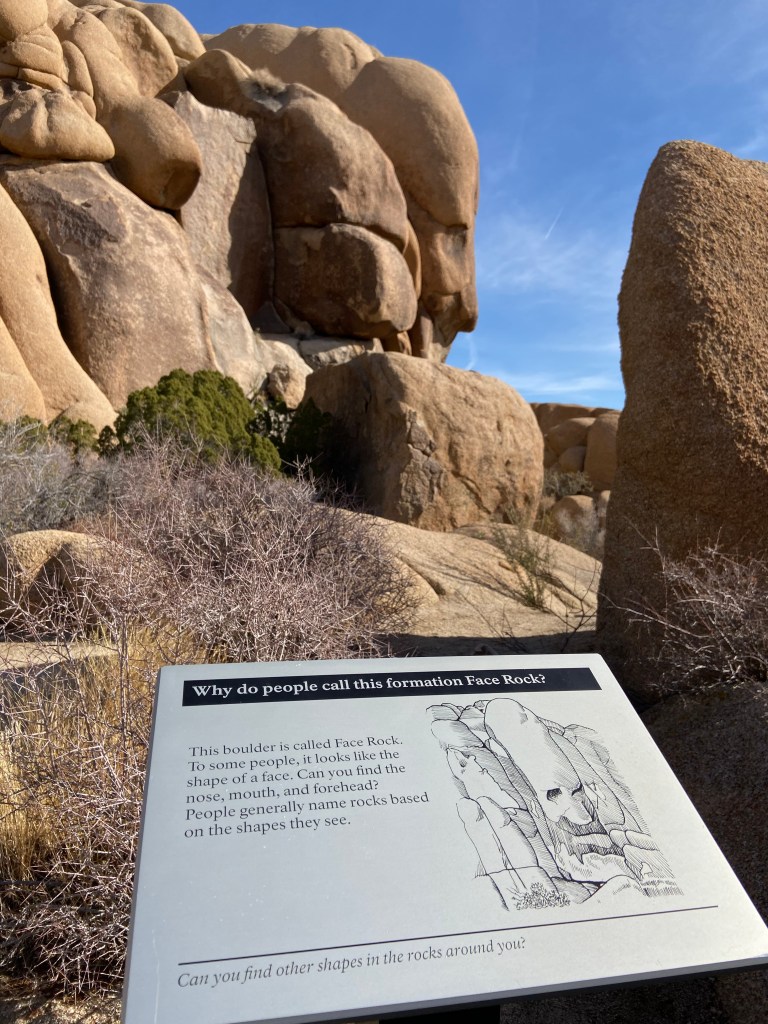
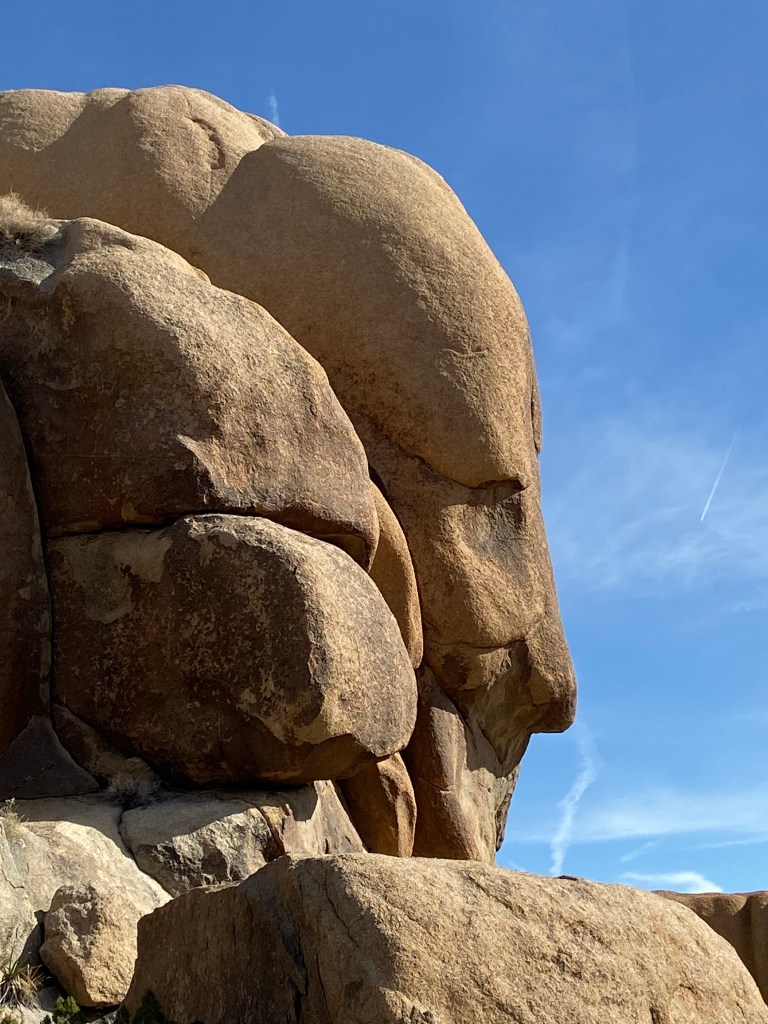
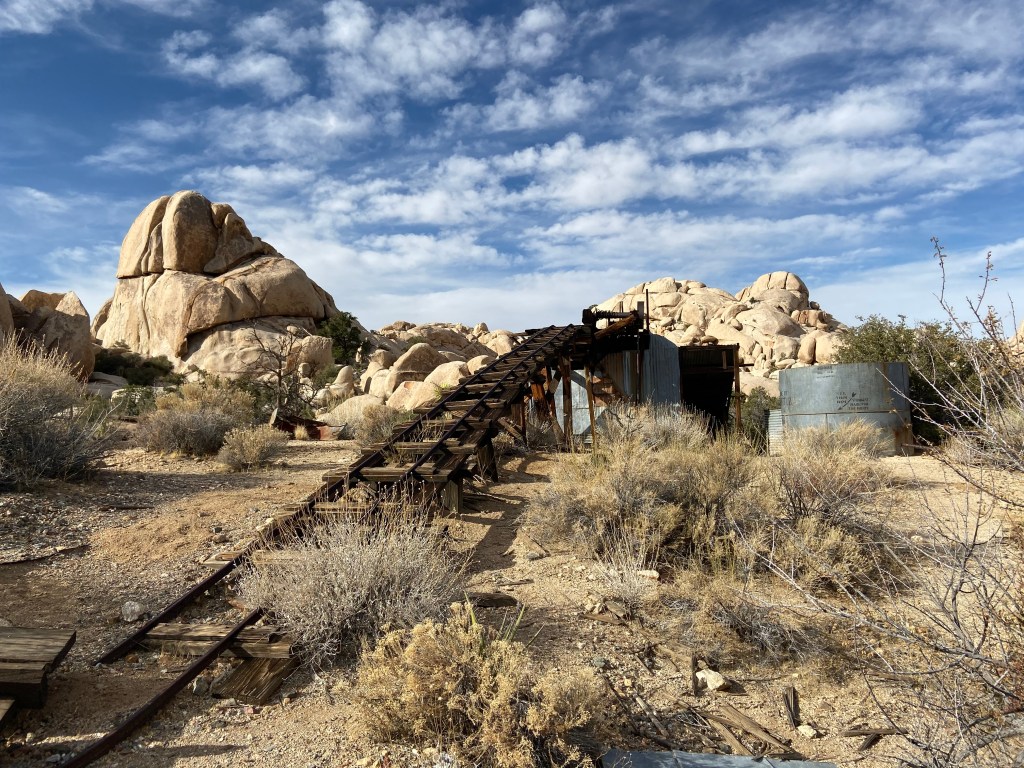
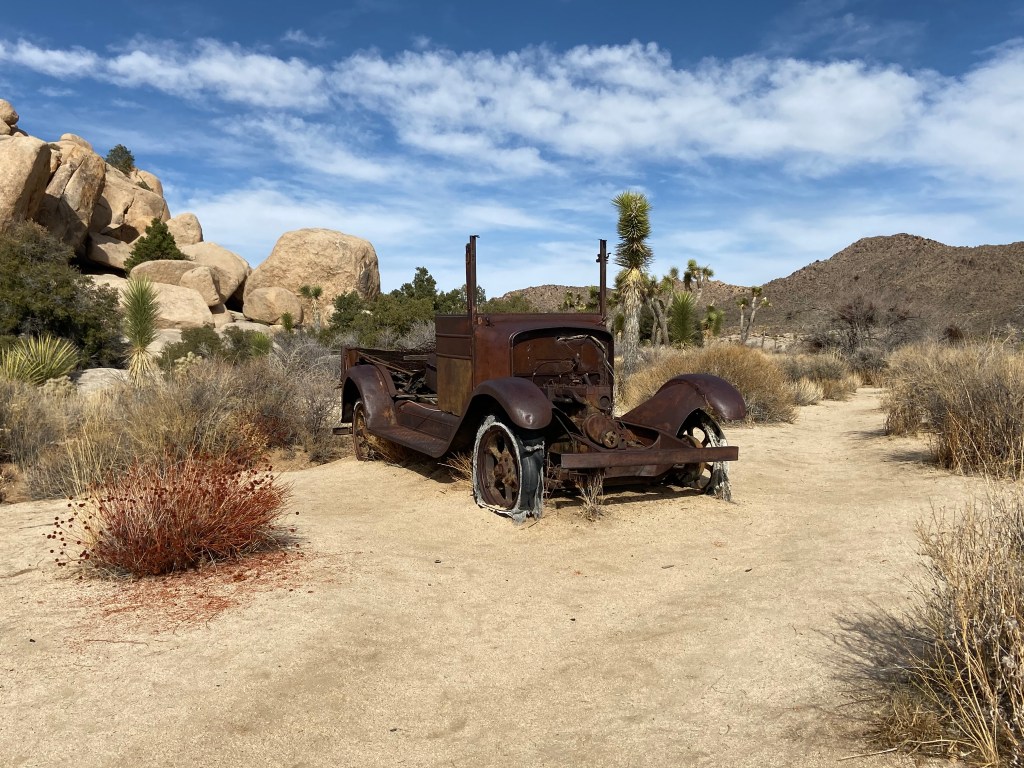
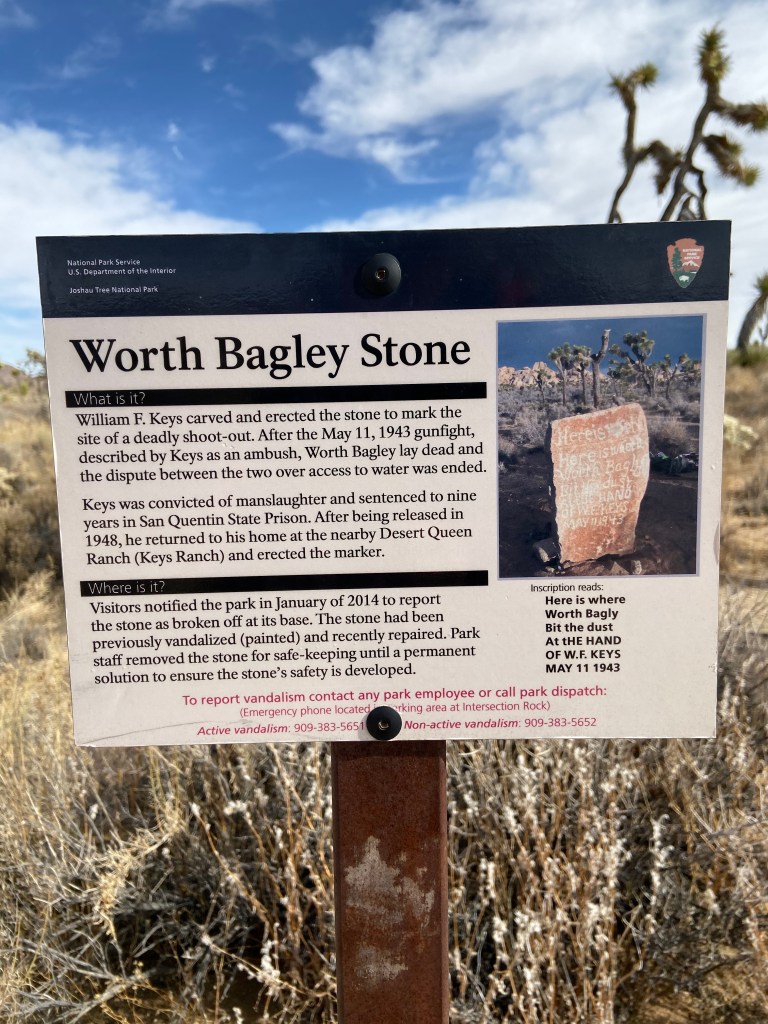
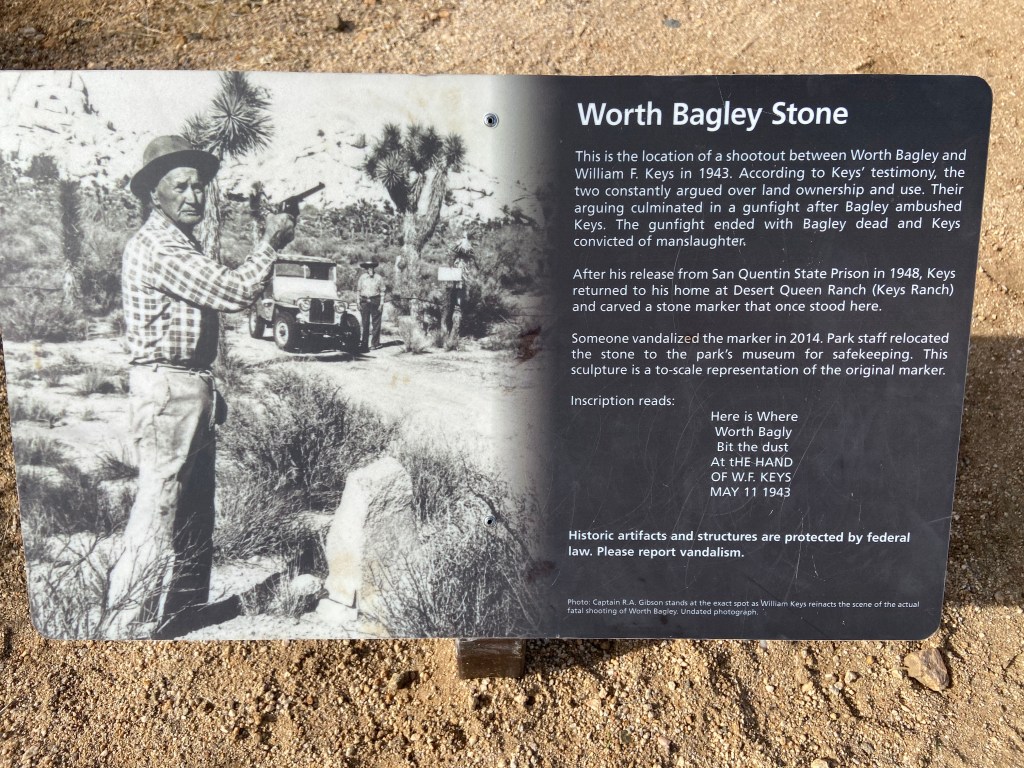
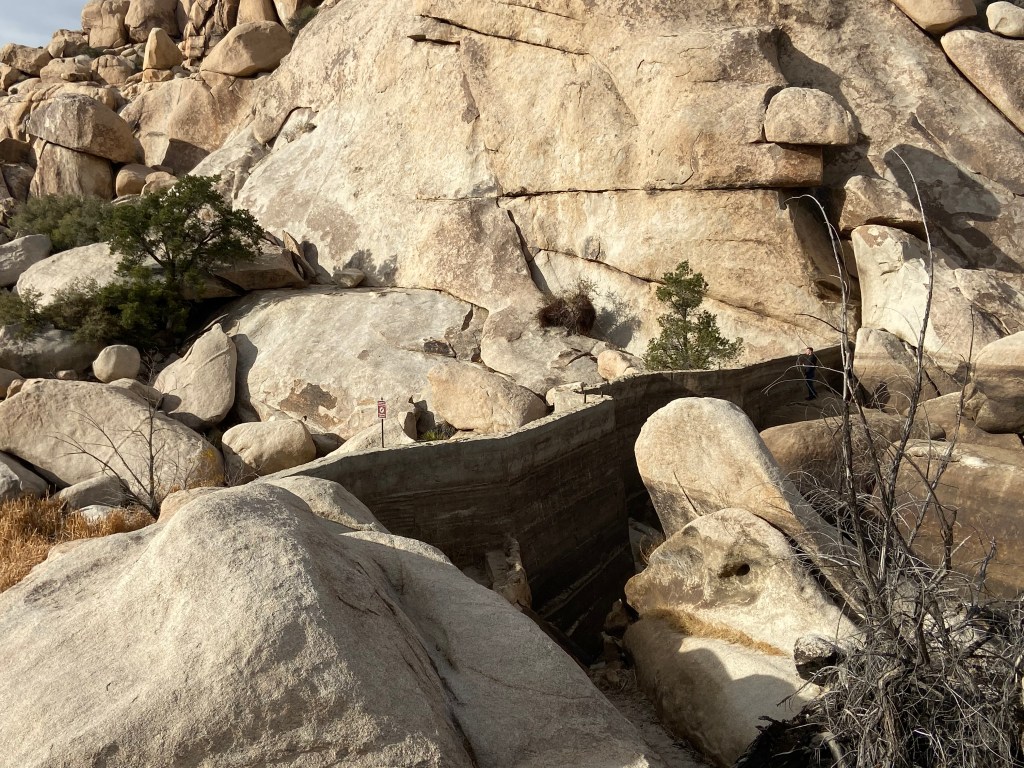
A picture of the Barker Dam which was built around 1900 to hold water for cattle and mining use. A trail loops around the area. Today, the local wildlife uses the water stored by the dam.
Cycling:
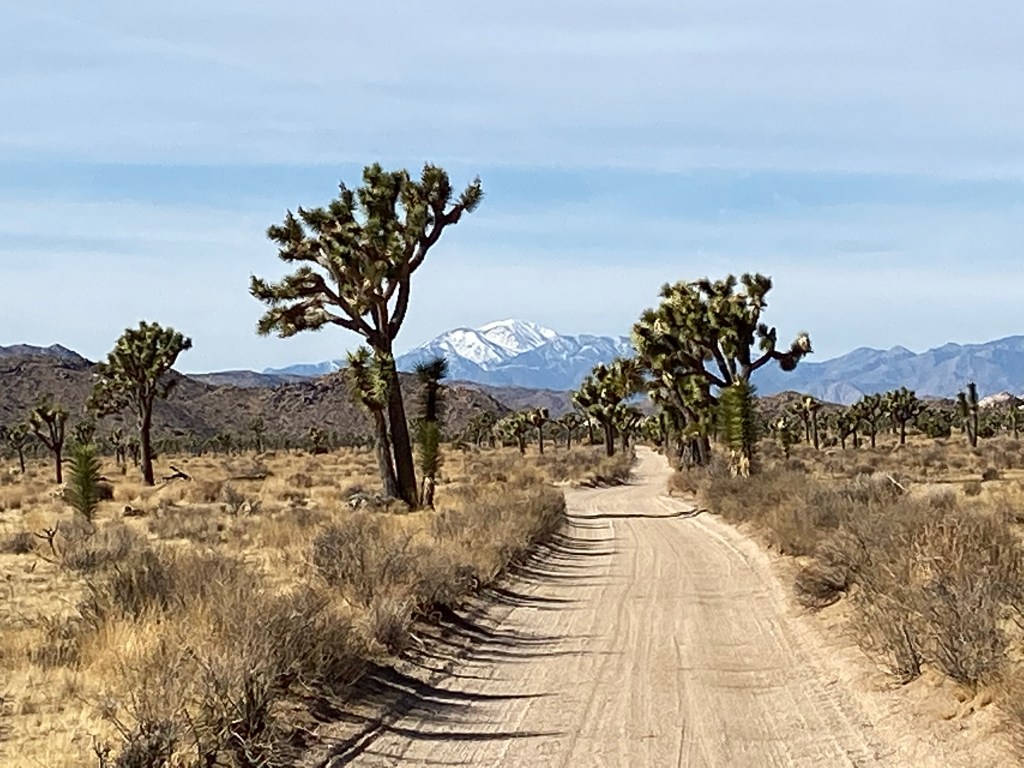
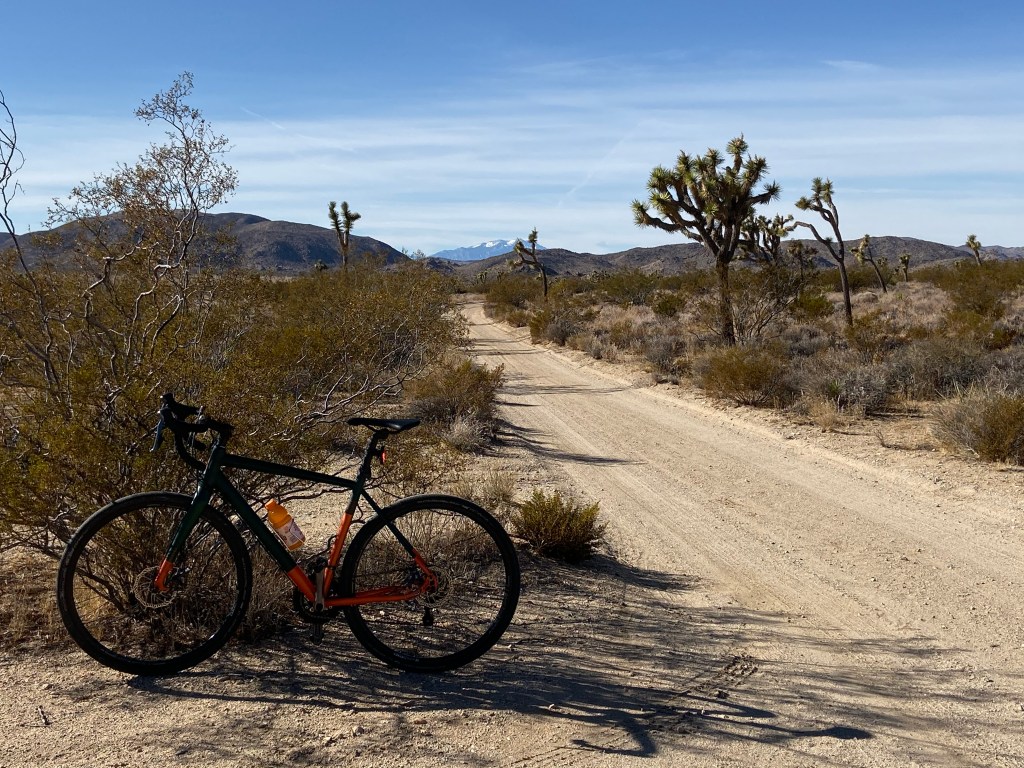
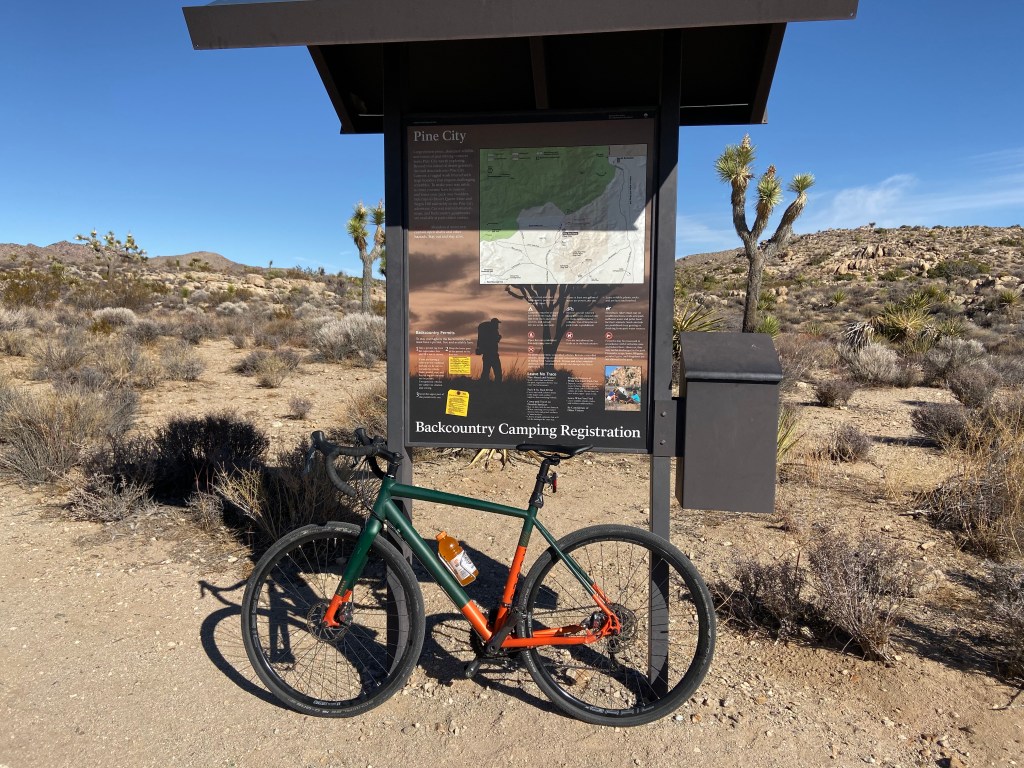
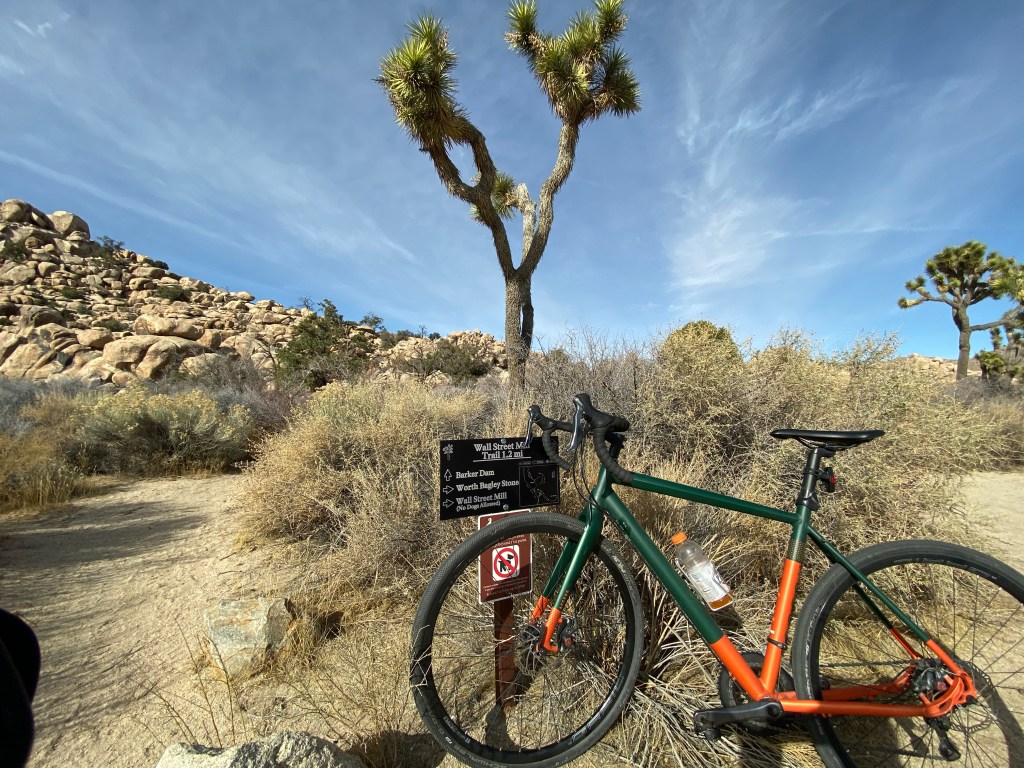
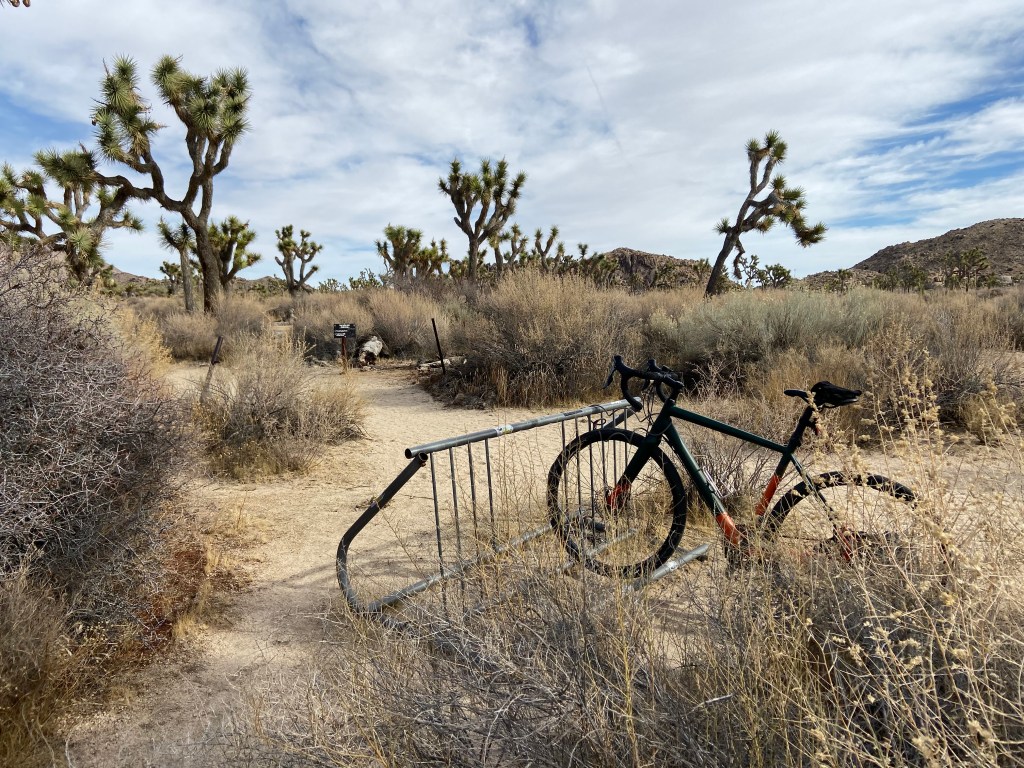
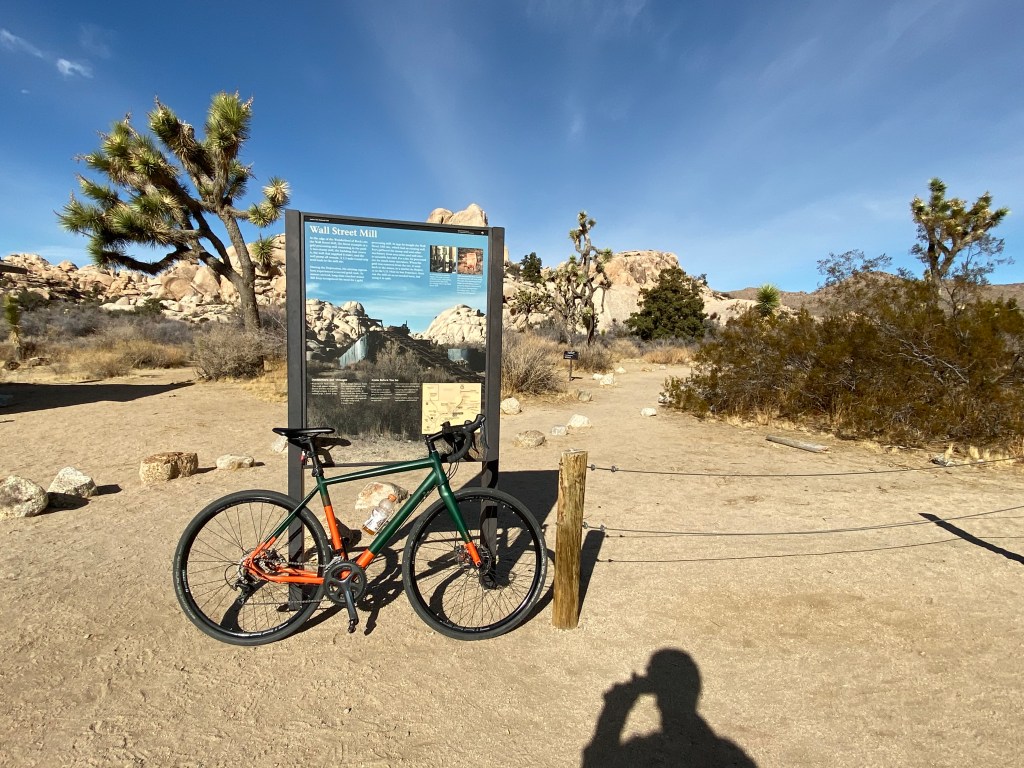
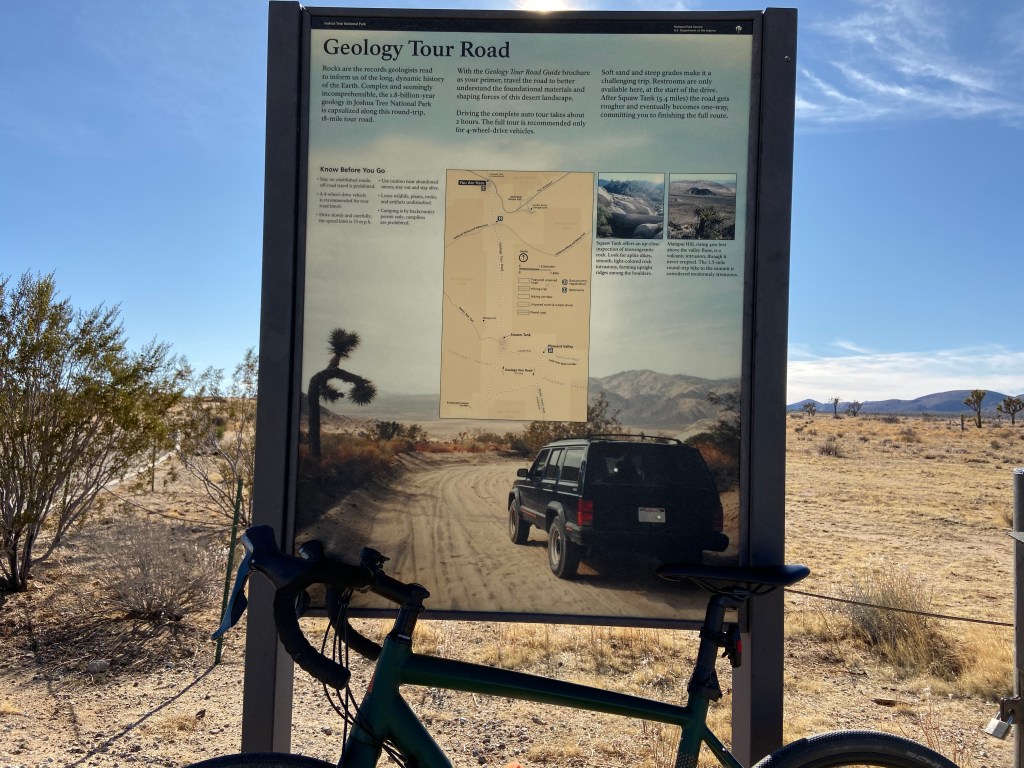
From the Jumbo Rocks Campground, I rode my gravel bike on O’Dell Road, Queen Valley Road, Bighorn Pass Road, and Geology Tour Road, all great gravel / dirt rides. Vehicle traffic on these roads was very light. A number of hikes start from these roads. Bike stands were available (usually somewhat hidden from the parking areas) which allowed locking the bike out of view prior to hiking.
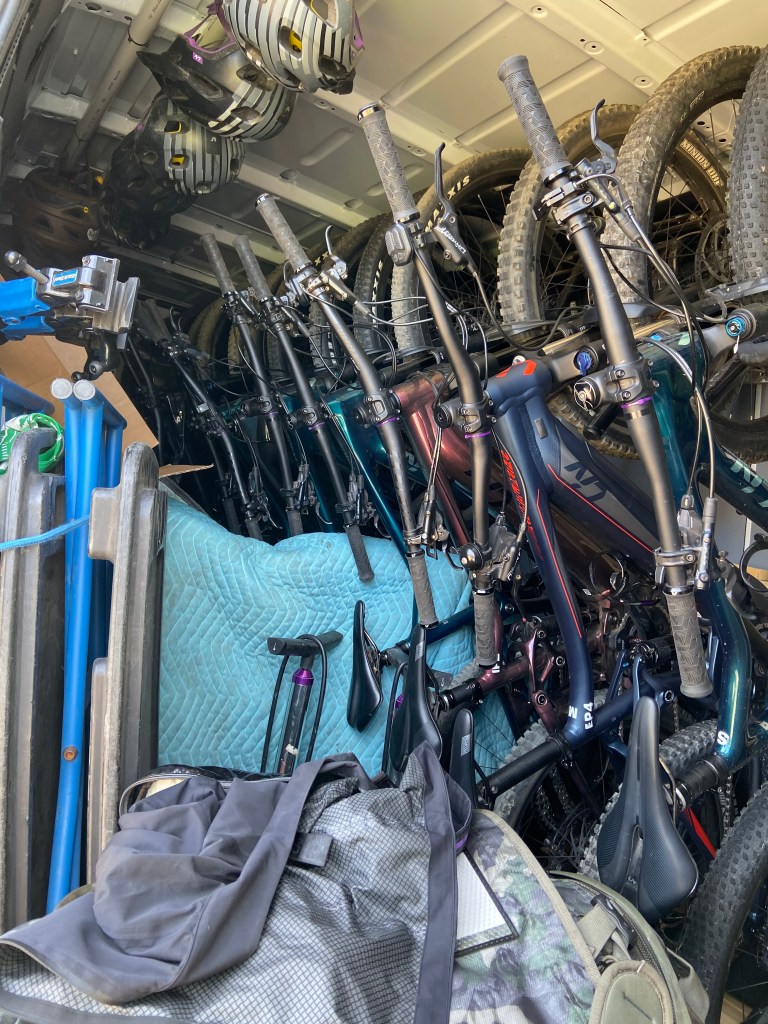
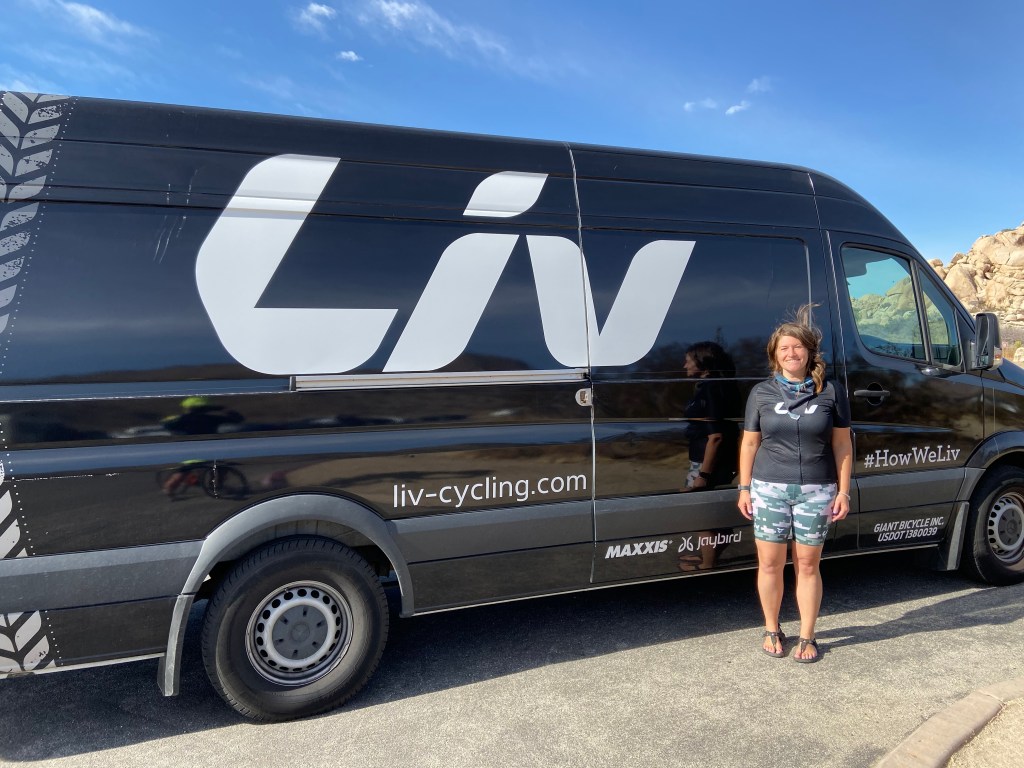
While cycling, I met Casey who travels North America working for a top name bicycle company. She travels in a van, going from one cycling event / show to another and sets up a demonstration / bike repair tent. What a cool job. She noted that normally she has a schedule set at least for the next 6 months which allows her to plan her travel and visits along the way. That day she had stopped at the park to get some exercise. It was amazing how stuffed the van was with top of the line bicycles. If I remember correctly, there were 12 bikes inside the van, along with a bunch of other gear.
We talked for quite awhile about how she “snagged” the job and how things were going.
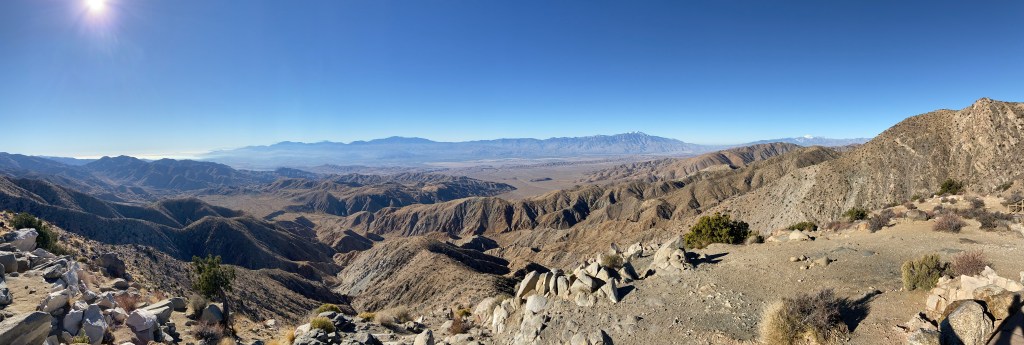
The drive to and sights from Keys View (an overlook in the park) is spectacular.

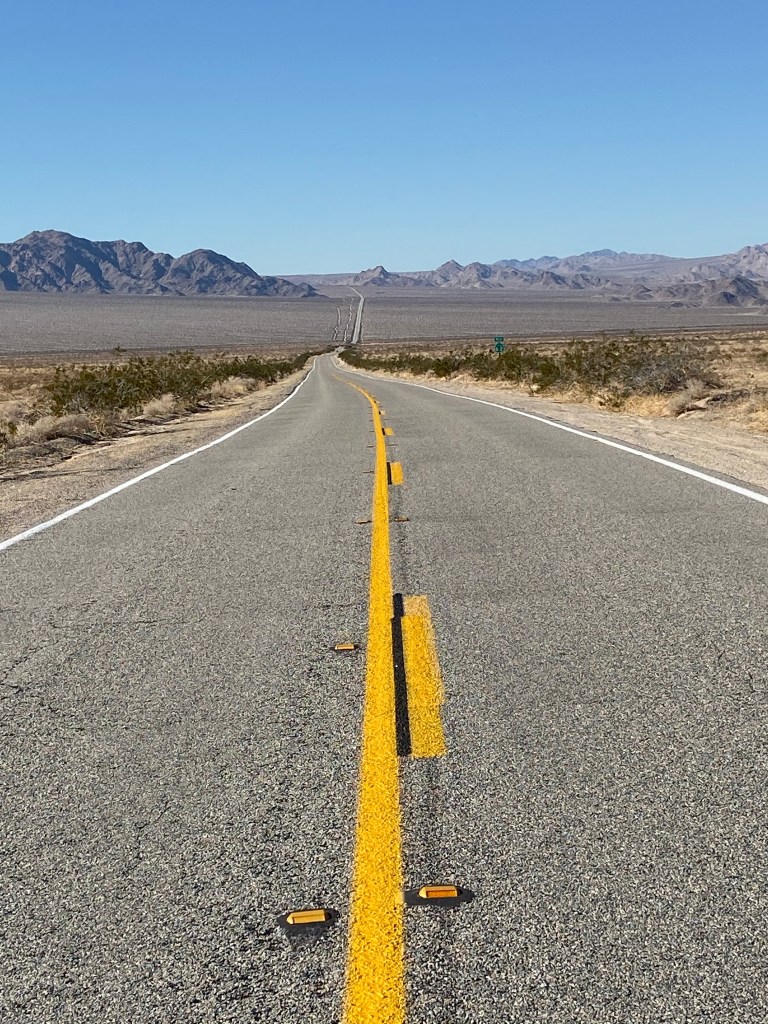
On the way back to Colorado, I took back roads to I-40. It is a very remote area.
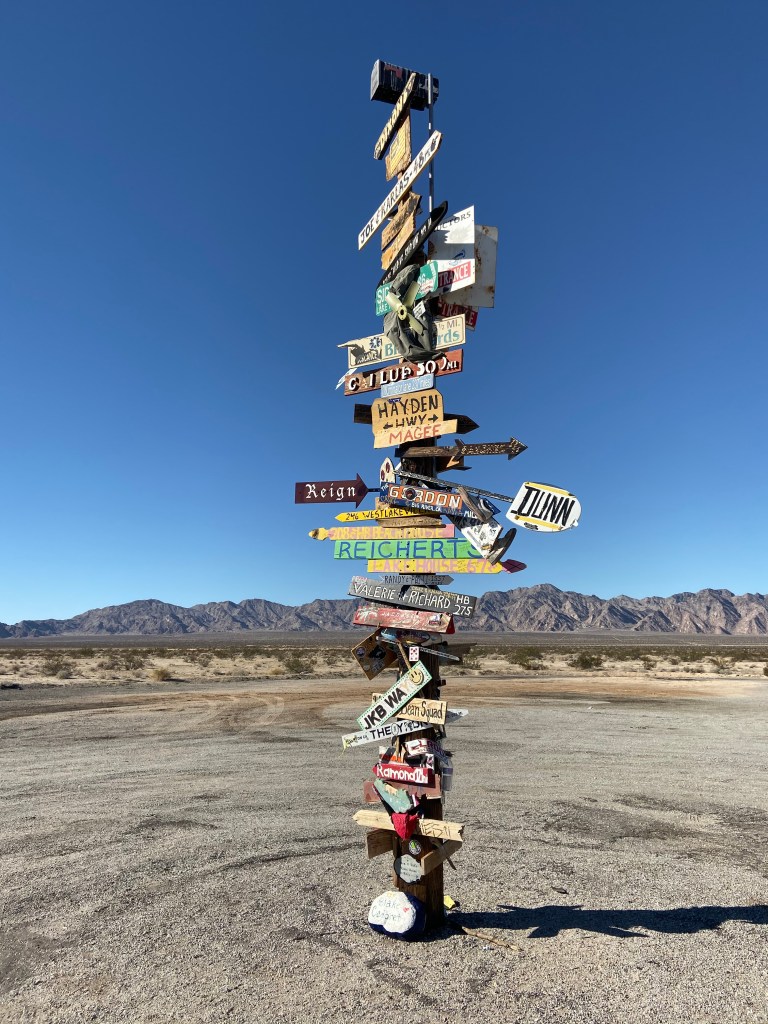
Now back to Colorado for the holidays. I will return to Joshua tree!
 vantravelusa2